


Key takeaways
What this article covers, in order:
- रेस्टोरेंट GST में असली उलझन कहाँ होती है
- dine-in, takeaway और self-delivery को एक जैसा मानना हमेशा सुरक्षित नहीं होता
- Swiggy और Zomato orders: sale आपकी, tax treatment अलग हो सकता है
- registration, composition और regular scheme: restaurant owner क्या सोचे
- monthly filing से पहले restaurant books में क्या ready होना चाहिए
- एक invented, illustrative महीने से समझें कि गलती कहाँ होती है
भारत में रेस्टोरेंट और कैफ़े के लिए GST filing का सीधा जवाब यह है: dine-in, takeaway, अपनी delivery, और Swiggy/Zomato जैसे operator orders को books में अलग रखना ज़रूरी है, क्योंकि tax treatment एक जैसा नहीं होता। सही invoice, सही reporting और सही return filing के बिना या तो liability दोबारा गिनी जाती है या खर्च पर ITC गलत समझ लिया जाता है। इस विषय में current rate entries, Section 9(5) treatment, registration rules और return instructions की आधिकारिक जानकारी CBIC की notifications, GST law, और GST Portal/GSTN पर प्रकाशित guidance में देखी जाती है।
रेस्टोरेंट GST में असली उलझन कहाँ होती है
रेस्टोरेंट business में sale एक ही लगती है—customer ने खाना खरीदा—लेकिन GST में हर channel की accounting अलग असर डाल सकती है। यही वजह है कि छोटे café, cloud kitchen, bakery-café, QSR outlet, dhaba या family restaurant में confusion अक्सर तीन जगह होता है:
- dine-in और takeaway को एक साथ book कर दिया जाता है
- Swiggy/Zomato orders को normal taxable sale की तरह फिर से GST liability में जोड़ दिया जाता है
- supplier bills पर भरा GST देखकर owner मान लेता है कि ITC मिल जाएगा
भारत में GST का framework Central Goods and Services Tax Act, 2017, State GST laws, Integrated Goods and Services Tax Act, 2017, और इनके तहत जारी CBIC notifications से चलता है। Practical filing और return data का flow GSTN और GST Portal पर होता है। इसलिए कोई भी current rate, threshold, due date या return instruction का latest version हमेशा official source पर verify करना चाहिए, क्योंकि hospitality sector में classification और notification wording matter करती है.
अगर आपकी billing अभी Excel, handwritten bill book, POS export और अलग Tally entry के mix पर चल रही है, तो गलती की संभावना बढ़ जाती है। ऐसे में GST invoicing से sale के समय ही सही CGST/SGST या IGST split बनाना useful होता है, खासकर जब एक से अधिक GSTIN, multiple branches या interstate catering जैसी situations हों।
dine-in, takeaway और self-delivery को एक जैसा मानना हमेशा सुरक्षित नहीं होता
Restaurant service पर कौन-सा treatment लागू होता है, यह GST law की relevant rate notifications और CBIC के published clarifications से तय होता है। Current rate entry, ITC eligibility और any exception की आधिकारिक position CBIC notifications और GST rate schedules में published होती है; exact figure वहीं से confirm करें।
Practical point यह है कि अधिकांश restaurant owners को सिर्फ menu price नहीं, बल्कि tax logic भी समझना पड़ता है:
- customer-facing bill पर क्या दिखेगा
- input side पर paid GST खर्च बनेगा या credit track होगा
- return में यह sale किस bucket में जाएगी
यहीं पर books साफ़ होना बहुत ज़रूरी है। अगर purchase bills, kitchen consumables, packaging, rent invoices, maintenance bills और marketplace fee notes बिखरे पड़े हों, तो महीने के अंत में GSTR-3B भरना guesswork बन जाता है। Photo या PDF से purchase bills उठाकर entry बनाना useful होता है, इसलिए OCR-based purchase capture hospitality businesses में manual typing कम कर सकता है।
अगर आपका outlet hotel premises के भीतर है, outdoor catering करता है, banquet service देता है, या mixed supplies के करीब पहुँचता है, तो notification wording और classification को CA से review कराना चाहिए। ऐसी situations में एक simple café rule हर case पर लागू नहीं मानना चाहिए. NEEDS EXPERT REVIEW
Swiggy और Zomato orders: sale आपकी, tax treatment अलग हो सकता है
भारत में food delivery aggregator orders पर सबसे बड़ी गलती यह होती है कि restaurant owner platform report को revenue report मानकर उसी amount पर फिर GST liability बना देता है। E-commerce operator model में restaurant service के लिए किस situation में operator tax pay करता है, यह Central Goods and Services Tax Act, 2017 की Section 9(5), CBIC notifications, और GST Portal की return reporting instructions से समझा जाता है। Current treatment का official wording वहीं published होता है।
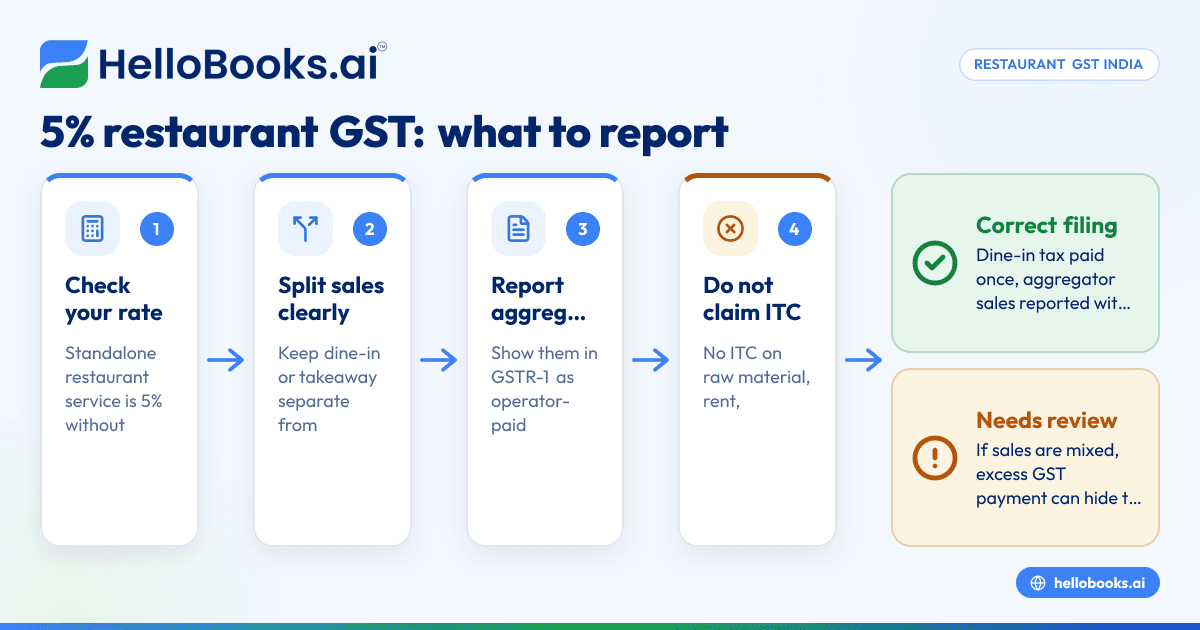
इसका practical असर यह है कि आपको कम से कम ये चार numbers अलग रखने चाहिए:
- dine-in sale
- takeaway / own delivery sale
- operator-facilitated food order value
- operator commission, service fee, ad fee या other recoveries
यही separation return filing में काम आता है। अगर यह split accounting system में पहले से नहीं होगा, तो month-end पर CSV देख-देखकर classification करना पड़ेगा। Restaurant owners के लिए GST return filing तब आसान बनती है जब invoice से ही सही bucket capture हो, और GSTR-1 तथा GSTR-3B उसी data से बनें।
Marketplace settlements में एक और issue आता है: gross sale, commission deduction, other charges और bank credit amount अलग-अलग होते हैं। Owner bank statement में सिर्फ net receipt देखता है और समझता है कि वही sale amount है। यह accounting को बिगाड़ देता है। Bank statement upload करके settlement lines को invoice data से match करना यहाँ practical मदद देता है, खासकर जब receipts UPI, card, IMPS, NEFT या aggregator settlement में mixed हों। ऐसे cases के लिए bank reconciliation ज़्यादा relevant है बनिस्बत manual ticking के।
registration, composition और regular scheme: restaurant owner क्या सोचे
किसे GST registration लेना है, कौन composition consider कर सकता है, और किस case में regular scheme better रहेगी—यह bare guess से तय नहीं होना चाहिए। Registration threshold, composition eligibility, exclusions और current filing obligations की आधिकारिक जानकारी Central Goods and Services Tax Act, 2017, संबंधित rules, CBIC notifications और GST Portal पर published FAQs/instructions में मिलती है। Exact current number official source से verify करें।
Restaurant businesses में decision अक्सर इन factors पर निर्भर करता है:
- turnover rupee terms में कितना है
- multiple states में GSTIN हैं या नहीं
- hotel, café, cloud kitchen, kiosk या catering mix क्या है
- e-commerce operator orders कितने हैं
- B2B billing कितनी होती है
- owner को compliance simplicity चाहिए या deeper books visibility
Composition कई owners को इसलिए आकर्षित करता है क्योंकि paperwork कम लगता है। लेकिन अगर आपका business growth mode में है, interstate activity है, multiple outlets हैं, या accounting visibility चाहिए, तो regular scheme अलग तरह का control देती है। यह conclusion हर case में same नहीं होगा। NEEDS EXPERT REVIEW
अगर आप already Tally में काम कर रहे हैं और switch से डर रहे हैं, तो Tally data migration या connector useful हो सकता है ताकि books का historic flow न टूटे। Restaurant chains या franchise-style structures में multi-GSTIN handling भी important हो जाती है, क्योंकि हर state registration का filing view अलग चाहिए। ऐसे businesses के लिए accounting software India सिर्फ invoice tool नहीं, बल्कि compliance plus operations layer बन जाता है।
monthly filing से पहले restaurant books में क्या ready होना चाहिए
Restaurant GST filing आख़िरी दिन की activity नहीं होनी चाहिए। Returns तब clean बनती हैं जब महीने भर entries disciplined हों। Hospitality business में निम्न records का साफ़ रहना बहुत ज़रूरी है:
- outward supplies by channel
- cancelled bills और credit notes
- operator statements
- purchase invoices with GSTIN and tax breakup
- rent, repairs, pest control, kitchen equipment, packaging, internet, software bills
- staff reimbursement और petty cash expenses
- bank statement and cash book alignment
- stock movement where relevant
अगर kitchen inventory और accounting disconnect हों, तो food cost, wastage और closing stock में mismatch आता है। GST filing सीधे stock return नहीं है, लेकिन purchases, expenses और profitability समझने के लिए inventory discipline useful है। Restaurant groups जो central kitchen, café counter और takeaway hub model पर चलते हैं, उन्हें inventory जैसी connected bookkeeping ज़्यादा practical पड़ती है।
Supplier side पर एक और महत्वपूर्ण बात है: जो invoices आप claim side या expense side में consider कर रहे हैं, वे supplier ने सही upload किए हैं या नहीं, यह check करना चाहिए। GSTR-2A/2B reconciliation का practical use यहीं है। इससे owner को कम से कम यह दिखता है कि कौन-सी purchase bill books में है पर matching statement में नहीं दिख रही। Credit eligibility का final legal decision facts पर निर्भर करेगा, पर visibility बहुत मदद करती है।
एक invented, illustrative महीने से समझें कि गलती कहाँ होती है
मान लीजिए, यह पूरी तरह illustrative और invented example है; numbers सिर्फ समझाने के लिए हैं। इसमें current legal rates, any threshold, special premises classification, discounts, tips, credit notes, breakup errors, TDS consequences, income-tax treatment, और state-specific nuances शामिल नहीं हैं। Exact treatment official CBIC/GST Portal guidance और आपके tax adviser से confirm होना चाहिए।
दिल्ली NCR में एक café का month मान लें:
- dine-in and takeaway billed value: ₹8,40,000
- app-based food orders value: ₹3,10,000
- operator commission and related charges: ₹62,000 plus applicable GST as shown in the operator tax invoice
- raw materials, bakery inputs, packaging and cleaning supplies: ₹3,75,000 plus supplier-side GST as invoiced
- rent and maintenance: ₹1,20,000 plus GST as invoiced
- bank credits actually received from operator after deductions: ₹2,41,000
अब owner अगर सिर्फ bank statement देखकर ₹2,41,000 को app sale book करे, तो revenue understate हो जाएगा। अगर वह operator order value ₹3,10,000 को normal outward taxable sale bucket में फिर जोड़ दे, तो liability overstate हो सकती है। और अगर supplier bills तथा operator charges पर paid GST को बिना eligibility check किए ITC मान ले, तो return exposure बन सकता है।
यही कारण है कि settlement-based businesses में invoice data, operator statement और bank credit को साथ देखना चाहिए। Bank statement upload और AI matching ऐसी business reality के लिए काम आता है, जहाँ UPI receipts, card settlements, cash deposit, NEFT rent, RTGS security deposit और aggregator payout सब एक ही statement में मिल जाते हैं।
e-invoice, e-way bill और restaurant sector में कब relevant होते हैं
हर restaurant को e-invoice या e-way bill की रोज़ ज़रूरत नहीं होती, लेकिन कुछ businesses के लिए यह अचानक relevant हो जाता है। E-invoicing की applicability, turnover criteria, document classes और IRN rules की current information Central Goods and Services Tax Rules, 2017, CBIC notifications और NIC/Invoice Registration Portal guidance में published होती है। Exact current threshold official source से verify करें।
Restaurant-only dine-in business शायद rarely e-way bill सोचे, लेकिन central kitchen से branch transfer, packaged goods dispatch, bulk event supplies, equipment movement या inter-branch stock transfer में logistics compliance relevant हो सकती है। E-way bill rules की official position CBIC notifications, GST rules और portal guidance पर published होती है।
अगर आपका business उस category में आता है जहाँ e-invoice लागू है, तो invoice save करते समय IRN और signed QR capture होना manual portal upload से बेहतर workflow दे सकता है। इसी तरह dispatch-linked invoices में e-way bill invoice से ही बन जाना repeat typing घटाता है। Hospitality-plus-retail models—जैसे gourmet food products, packaged sauces, bakery hampers, festive boxes—में यह और useful हो सकता है। Relevant होने पर e-invoicing software और e-way bill software compliance friction कम करते हैं।
Hindi में filing support चाहते owners के लिए क्या practical है
भारत में बहुत से restaurant owners Hindi, English और Hinglish mix में काम करते हैं। Accountant से अलग, owner का रोज़ का सवाल practical होता है: “यह sale कहाँ डालूँ?”, “यह GST वाला bill expense है या credit?”, “Swiggy settlement match क्यों नहीं हो रहा?”
ऐसे में software का value fancy dashboard नहीं, बल्कि day-to-day clarity है। अगर owner mobile से bill बनाता है, purchase bill की photo डालता है, bank statement upload करता है, और फिर उसी data से GSTR-1 व GSTR-3B file कर पाता है, तो compliance routine बनती है। HelloBooks इस article के context में इसलिए relevant है क्योंकि यह India workflow के लिए GST invoices बनाता है, place-of-supply के हिसाब से tax head split रखता है, purchase bills capture करता है, bank statement upload से reconciliation कराता है, और recorded data से सीधे GSTR-1 और GSTR-3B file करने देता है। Hindi/Hinglish users के लिए WhatsApp पर Noor assistant का option भी practical हो सकता है जब owner desktop पर न बैठा हो।
अगर आप अभी evaluation phase में हैं, तो India page, pricing और demo देखना बेहतर रहेगा, क्योंकि restaurant setup branch count, GSTIN structure और workflow complexity पर depend करता है।
filing से पहले यह जाँच लें कि आपकी books return से मेल खाती हैं
Return submit करने से पहले restaurant owners को कम से कम यह sanity check कर लेना चाहिए:
- sales channel-wise split operator reports से मेल खा रहा है
- bank receipts net settlement के कारण gross sale से अलग क्यों हैं, यह understood है
- purchase invoices supplier GSTIN और tax breakup सहित recorded हैं
- GSTR-2A/2B visibility देखी गई है, जहाँ relevant हो
- dine-in, takeaway, self-delivery और operator orders को एक bucket में नहीं डाला गया
- interstate billing या banquet/catering invoice में गलत IGST बनाम CGST/SGST split नहीं हुआ
- branch-wise या GSTIN-wise data अलग है
अगर आपको सिर्फ quick validation चाहिए, तो free tools काम आते हैं—जैसे GSTIN validator, HSN code search और GST reconciliation checker। ये खासकर तब useful हैं जब CA को data भेजने से पहले base hygiene check करना हो।
अंतिम बात सीधी है: restaurant GST मुश्किल इसलिए लगता है क्योंकि खाना एक product जैसा दिखता है, लेकिन law, operator model, invoice format, GSTIN reporting और settlement accounting मिलकर इसे compliance problem बना देते हैं। India context में सही answer कोई generic template नहीं, बल्कि channel-wise bookkeeping, official CBIC/GSTN guidance, और clean monthly records है।


