


Key takeaways
What this article covers, in order:
- एजन्सी आणि सर्व्हिस फर्म्समध्ये GST फाइलिंग अवघड का वाटते
- registration, GSTIN आणि invoice चा पाया कसा ठरतो
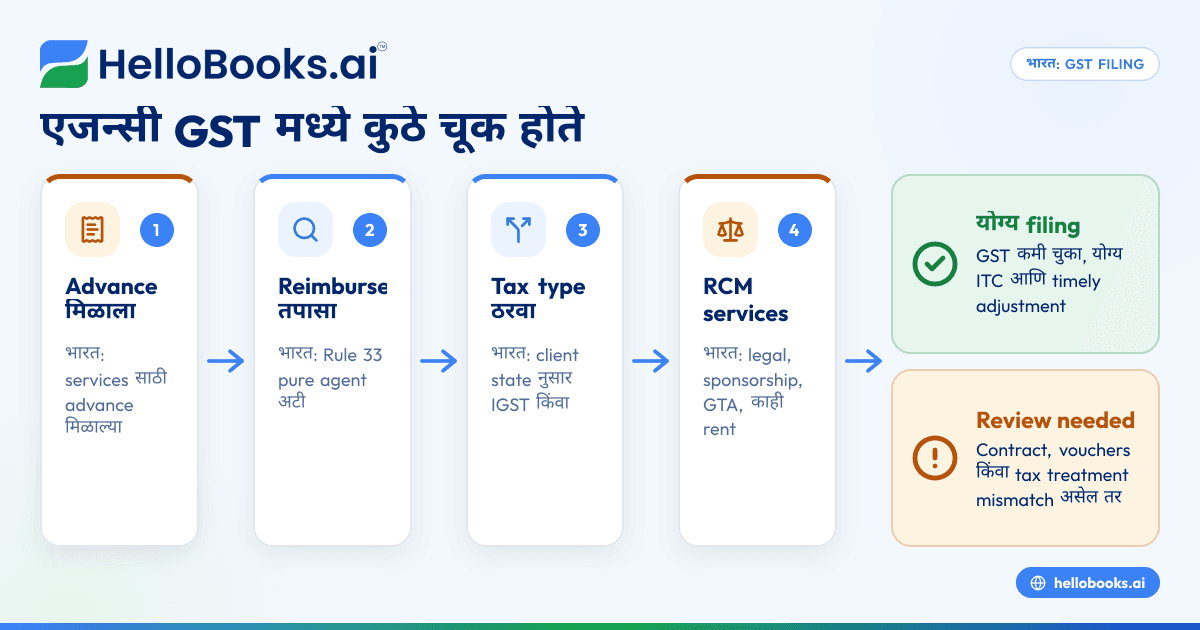
- advance receipt, retainer आणि milestone billing यांचा GST अर्थ
- reimbursement, out-of-pocket खर्च आणि pure agent ची सीमारेषा
- place of supply मुळे CGST/SGST की IGST ठरते
- vendor bills, GSTR-2A/2B आणि ITC tracking कसे जुळवावे
भारतामध्ये एजन्सी आणि सर्व्हिस व्यवसायांसाठी GST फाइलिंगचा मुख्य प्रश्न असा असतो: advance कधी taxable होतो, reimbursement वर GST लागतो का, CGST/SGST की IGST लावायचा, आणि GSTR-1 व GSTR-3B मध्ये नेमके तेच आकडे कसे न्यायचे. याचे उत्तर Central Goods and Services Tax Act, 2017, Integrated Goods and Services Tax Act, 2017 आणि CBIC/GSTN च्या अधिकृत मार्गदर्शनात आहे. दैनंदिन कामात योग्य invoice, place of supply, supplier bills ची reconciliation आणि bank statement upload यामुळे चुका मोठ्या प्रमाणात टाळता येतात.
एजन्सी आणि सर्व्हिस फर्म्समध्ये GST फाइलिंग अवघड का वाटते
सेवा व्यवसायात stock पेक्षा contract जास्त महत्त्वाचा असतो. एक retainer, एक campaign fee, एक pass-through खर्च, एक disputed invoice, एक credit note, एक foreign client, आणि एक vendor bill — एवढ्यातच GST treatment बदलतो. म्हणूनच agencies, consultants, IT service firms, recruitment firms, design studios, PR teams आणि freelancers यांच्याकडे bookkeeping बरोबर invoicing logic असणे जास्त गरजेचे ठरते.
भारतामध्ये GST चे कायदे मुख्यतः Central Goods and Services Tax Act, 2017, Integrated Goods and Services Tax Act, 2017 आणि त्याखालील Rules मध्ये आहेत. यांचे प्रशासन CBIC करतं, तर return filing आणि invoice/return data flow साठी GSTN आणि GST portal वापरले जातात. registration threshold, tax rate, return due date, e-invoice applicability threshold किंवा e-way bill limits यांसारखे current figures नेहमी CBIC notifications, GST portal help content किंवा NIC/e-invoice/e-way bill system वर तपासावेत.
एजन्सींमध्ये आणखी एक भारतीय वास्तव आहे: receipts UPI, NEFT, RTGS किंवा IMPS ने वेगवेगळ्या तारखांना येतात; vendor bills PDF, photo किंवा WhatsApp वर पडतात; आणि final books बऱ्याचदा Tally मध्ये किंवा spreadsheet मध्ये अर्धवट राहतात. त्यामुळे GST return हा स्वतंत्र काम न राहता billing, collections आणि purchase booking यांचा परिणाम बनतो.
registration, GSTIN आणि invoice चा पाया कसा ठरतो
कधी registration घ्यायचे, कोणता SAC/HSN वापरायचा, inter-state supply आहे की intra-state, export of service आहे का — या गोष्टी सुरुवातीच्या आहेत. पण बहुतांश सेवा व्यवसाय चूक इथेच करतात: कंपनीचा broad description पाहून invoice बनवला जातो, contract पाहून नाही.
उदाहरणार्थ, digital marketing agency, software implementation firm, management consultant किंवा recruitment service provider — नाव काहीही असो, tax treatment कामाच्या स्वरूपावर, recipient च्या GSTIN वर, place of supply वर आणि invoice documentation वर अवलंबून असतो. service code आणि applicable treatment चे current classification notes अधिकृत GST tariff schedule आणि CBIC material मध्ये तपासावे.
यासाठी invoice तयार करताना ग्राहकाचा GSTIN, place of supply, state code, SAC आणि tax head split बरोबर नोंदवणे महत्त्वाचे आहे. HelloBooks मध्ये GST invoice बनवताना ग्राहकाच्या GSTIN आणि state वरून CGST/SGST किंवा IGST split सातत्याने बसतो, त्यामुळे एकाच client ला कधी local तर कधी inter-state म्हणून चुकीचे tax head लागू होण्याचा धोका कमी होतो. जर तुमचा business e-invoice च्या applicable class मध्ये येत असेल, तर current threshold CBIC notification आणि GST system advisories मध्ये तपासूनच कृती करावी; त्या परिस्थितीत invoice save करतानाच IRN आणि signed QR मिळणे काम वेगवान करते.
advance receipt, retainer आणि milestone billing यांचा GST अर्थ
सेवा व्यवसायात पैसा आधी येतो आणि काम नंतर सुरू होते, किंवा मासिक retainer येतो पण scope quarter-end ला बंद होतो. म्हणून advance handling ही agency GST मधली वारंवार येणारी बाब आहे. कोणत्या टप्प्यावर tax liability निर्माण होते, receipt voucher लागतो का, final invoice वर adjustment कसे दिसते, हे CGST Act आणि संबंधित Rules नुसार पाहावे; current compliance position साठी CBIC circulars आणि GST portal guidance तपासणे आवश्यक असते.
इथे एक illustrative आणि invented प्रसंग घ्या. समजा पुण्यातील एका branding studio ला एका client कडून ₹1,80,000 इतका advance receipt मिळाला, आणि हा आकडा फक्त समजावण्यासाठी बनवलेला आहे; यात discounts, later scope changes, bad debts, LUT/export issues, TDS credit आणि contractual disputes धरलेले नाहीत. जर हा receipt project start आधी आला, तर books मध्ये receipt, tax implication आणि नंतर final invoice adjustment यांचा संबंध दिसला पाहिजे. फक्त अंतिम invoice च्या महिन्यात turnover दाखवला, पण receipt आधी घेतला, तर GSTR-1/GSTR-3B आणि bank credits यांच्यात mismatch उभा राहू शकतो.
या टप्प्यावर bank statement upload उपयुक्त ठरतो. HelloBooks मध्ये Indian bank statement upload करून AI reconciliation केल्यावर UPI, NEFT, RTGS किंवा IMPS receipts संबंधित invoices किंवा advances शी जुळवता येतात. त्यामुळे “हा पैसा retainer होता की old dues?” हा प्रश्न filing च्या आधीच स्पष्ट होतो.
reimbursement, out-of-pocket खर्च आणि pure agent ची सीमारेषा
एजन्सी व्यवसायात client साठी केलेले media spend, travel, printing, courier, venue booking, government fee किंवा third-party subscription हे reimbursement म्हणून वसूल केले जातात. पण प्रत्येक reimbursement taxable value मधून बाहेर पडत नाही. हा मुद्दा CGST Rules मधील pure agent framework शी जोडलेला आहे, आणि interpretation साठी CBIC clarifications तसेच binding advance rulings/precedents वेगवेगळ्या facts वर बदलू शकतात. म्हणून contract drafting आणि invoice wording दोन्ही महत्त्वाचे असतात.
व्यवहारात साधा प्रश्न असा असतो: तुम्ही client च्या वतीने केवळ payment केला का, की तुम्ही service स्वतः procure करून markup सह पुढे charge केली? जर ad platform invoice client च्या नावावर आहे, आणि agency फक्त management fee आकारते, तर treatment एक असू शकतो; पण जर platform purchase agency च्या नावावर घेऊन bundled amount client ला charge केला, तर treatment वेगळा लागू शकतो. current legal position facts वर अवलंबून असल्याने final view CA/indirect tax expert कडून घ्यावा.
इथे एक illustrative आणि invented गणना पाहू. समजा agency ने client साठी ₹48,000 चा venue booking खर्च आधी भरला आणि नंतर तो reimbursement म्हणून मागितला, तसेच स्वतःची coordination fee ₹22,000 लावली. हे पूर्ण आकडे फक्त समजावण्यासाठी बनवलेले आहेत; यात vendor invoice wording, pure agent contract clause, input tax credit restrictions, and whether the supply was composite धरलेले नाही. जर venue booking agency च्या स्वतःच्या supply चा भाग मानला गेला, तर taxable value मध्ये ₹48,000ही येऊ शकतो. पण pure agent conditions पूर्ण झाल्या तर agency कदाचित फक्त स्वतःच्या fee वर tax दाखवेल. इथे documentation निर्णायक असतं.
OCR ने supplier bills capture होणे आणि त्या bills ला client-wise tag करणे उपयोगी पडते. HelloBooks मध्ये purchase bills photo किंवा PDF मधून OCR ने book केल्यावर नंतर reimbursement, expense booking आणि GSTR-2A/2B reconciliation यांचा मागोवा ठेवणे सोपे होते.
place of supply मुळे CGST/SGST की IGST ठरते
service business मधली सगळ्यात महाग चूक म्हणजे wrong tax head. महाराष्ट्रातील client ला IGST लावणे किंवा कर्नाटकातील registered recipient ला CGST/SGST लावणे ही invoice-level चूक असली तरी return, cash flow आणि client ITC तिन्हीवर परिणाम करते. यासाठी IGST Act, 2017 मधील place of supply provisions पाहावे. current interpretive guidance CBIC circulars आणि GST portal resources मध्ये मिळते.
साधारण B2B services मध्ये recipient चं location निर्णायक असतं, पण event-related services, immovable property related services, performance-based services, intermediary questions, and export of services मध्ये rules वेगळे असू शकतात. त्यामुळे “client दिल्लीचा आहे” एवढ्यावर tax head ठरत नाही; contract कोणासाठी, registration कुठे, event कुठे, property कुठे, आणि invoice कोणाला यावर उत्तर बदलू शकतं.
HelloBooks मध्ये place-of-supply logic invoice मध्येच लागू झाल्याने tax head split हाताने बदलण्याची गरज कमी होते. agency कडे अनेक राज्यांत GSTIN असतील तर एकाच login मधून multi-GSTIN हाताळणे आणि प्रत्येक राज्याची outward supply वेगळी ठेवणे अधिक सुरक्षित ठरतं. हे विशेषतः त्या firms साठी उपयोगी आहे ज्यांची टीम मुंबई, Bengaluru, Gurugram किंवा Hyderabad मधून services देत असते आणि compliance एकत्र ठेवायची असते.
vendor bills, GSTR-2A/2B आणि ITC tracking कसे जुळवावे
service firms बहुतेक वेळा outward supply वर लक्ष देतात; पण ITC चे नुकसान inward side वर होते. software subscriptions, professional fees, cloud tools, rent, contractors, design vendors, legal fees, travel vendors, printing, and office expenses या सगळ्यांवर tax data नीट नसेल तर GSTR-3B claim आणि GSTR-2B visibility मध्ये gap राहतो.
input tax credit ची eligibility, blocked credits, conditions for availment, supplier compliance dependency यासाठी CGST Act आणि संबंधित Rules पाहावेत. GSTR-2A/2B चे function आणि updated system behaviour GSTN व GST portal वर प्रकाशित केले जाते. म्हणून “invoice मिळाला म्हणजे ITC मिळालाच” असा सरळ नियम प्रत्यक्षात पुरेसा नसतो.
HelloBooks मध्ये supplier bills book केल्यावर GSTR-2A/2B reconciliation आणि ITC tracking केल्याने कोणते invoices supplier ने अजून upload केले नाहीत, कुठे GSTIN mismatch आहे, कुठे duplicate entry आहे, हे filing आधी दिसू शकतं. agency services मध्ये margins अनेकदा fee-based असतात; त्यामुळे लहान-lहान purchase mismatches सुद्धा महिन्याच्या cash requirement वर परिणाम करतात.
जर vendor payment वर TDS कापला असेल, किंवा काही inward supplies वर reverse charge चा प्रश्न असेल, तर त्याची accounting वेगळी धरावी लागते. HelloBooks मध्ये TDS आणि reverse charge handling books मध्येच बसवल्याने side spreadsheet कमी लागतो. मात्र लागू rates, sections आणि payment timelines या सगळ्यांचे current figures Income-tax Act, 1961, relevant rules आणि Income Tax Department/CBIC publications मध्ये तपासावेत.
GSTR-1 आणि GSTR-3B मोफत फाइलिंगचा अर्थ काय असावा
एजन्सींना “free GST filing” ऐकायला सोपं वाटतं, पण प्रत्यक्ष उपयोग तेव्हाच असतो जेव्हा filing books पासून वेगळं नसेल. जर invoices एका system मध्ये, purchases दुसऱ्यात, collections bank PDF मध्ये, आणि final return CA च्या spreadsheet मध्ये असेल, तर free पेक्षा accuracy महत्त्वाची ठरते.
म्हणून GSTR-1 आणि GSTR-3B direct filing हा feature म्हणून नव्हे तर workflow म्हणून पाहणे योग्य. invoice issue झाला, tax head split बरोबर बसला, purchase bills book झाले, bank statement upload झाला, ITC review झाली, आणि मग return थेट GST portal workflow कडे गेला — हा practical अर्थ जास्त महत्त्वाचा आहे. HelloBooks याच दोन returns साठी direct filing देतो, त्यामुळे agencies ना invoice register आणि return figures वेगवेगळे reconcile करण्याची मेहनत कमी होते.
जर तुम्ही अजून spreadsheet किंवा Tally वर असाल, तर migration हा देखील वास्तविक प्रश्न असतो. Tally सोडायचा की चालू ठेवायचा, हा binary निर्णय असण्याची गरज नाही. HelloBooks कडे Tally migration आणि connector असल्याने काही firms parallel run ठेवून transition करतात. यामुळे accountant, founder आणि external CA यांच्यात data continuity राखता येते.
agency operations मध्ये books, inventory नसले तरी control कसा ठेवायचा
“आम्ही service business आहोत, inventory नाही” असं अनेक agencies म्हणतात. पण control ची गरज इथेही असते: retainer ageing, unbilled revenue, expense recoverability, branch-wise GSTIN data, team approvals, receivables by client, and profitability by project. financial reports वेळेवर नसेल तर GST filing technically बरोबर असूनही business decisions चुकीचे जाऊ शकतात.
HelloBooks मधील financial reports त्याच entries वरून बनतात ज्यावर GST returns तयार होतात, त्यामुळे books आणि returns वेगळ्या गोष्टी राहत नाहीत. mobile app मुळे founder फोनवरून invoice किंवा expense नोंदवू शकतो, आणि Noor assistant वर WhatsApp मध्ये Hindi, English किंवा Hinglish मध्ये basic bookkeeping प्रश्न विचारता येतात. हे विशेषतः त्या Indian businesses साठी उपयोगी असतं जे कार्यालयाबाहेर UPI receipts, vendor photos किंवा client approvals हाताळत असतात.
काही service firms कडे merchandise, printed material, sample kits किंवा event collateral चा stock असतो; अशावेळी inventory tracking देखील उपयोगी ठरू शकते. मात्र pure service business साठी मुख्य लाभ invoice-to-return continuity आणि receivables visibility मध्येच असतो.
कोणत्या गोष्टींसाठी तज्ज्ञांचा सल्ला अजूनही आवश्यक आहे
software repetitive चुका कमी करतं; पण legal characterisation तुमच्या facts वर ठरतं. खालील प्रसंगांमध्ये CA किंवा indirect tax professional चा मतभेदरहित review घ्यावा:
- export of services, LUT, foreign currency realisation आणि zero-rated treatment
- pure agent documentation आणि reimbursements
- credit notes, partial dispute, bad debts आणि post-supply discounts
- reverse charge applicability on specific inward services
- multi-state operations, branch billing, employee cross-charge questions NEEDS EXPERT REVIEW
- Companies Act, 2013 किंवा MCA reporting शी books alignment
- DPDP Act, 2023 अंतर्गत customer/vendor personal data handling governance, जे accounting data workflows ला स्पर्श करू शकते
current rates, thresholds, due dates, form applicability, and notifications यांसाठी नेहमी अधिकृत source पाहा: CBIC, GST portal/GSTN, Income Tax Department, MCA, आणि आवश्यक असल्यास RBI guidance, जर foreign remittances किंवा banking documentation चा मुद्दा असेल.
तपासण्यासाठी आणि काम सोपं करण्यासाठी तुम्ही GST return filing, smart invoicing, bank reconciliation, GST reconciliation checker, GSTIN validator आणि India pricing पाहू शकता.
एजन्सी किंवा service firm साठी सारांश इतकाच: GST filing “free” तेव्हाच खरोखर उपयोगी ठरते जेव्हा invoice, place of supply, purchase bills, ITC tracking आणि bank reconciliation हे आधीच बरोबर असतात. भारतात तेच compliance वाचवतं — आणि client चा ITC, तुमचा cash flow आणि books तिन्ही जुळवून ठेवतं.


