


Key takeaways
What this article covers, in order:
- ਪਹਿਲਾਂ ਇਹ ਸਮਝੋ: invoice compliance ਅਤੇ goods movement compliance ਇੱਕੋ ਨਹੀਂ
- ਕਿਹੜੇ ਕਾਰੋਬਾਰ ਨੂੰ e-invoicing ਵਿੱਚ ਆਉਣਾ ਪੈਂਦਾ ਹੈ
- e-way bill ਕਦੋਂ ਲੱਗਦਾ ਹੈ: sale ਤੋਂ ਵੱਧ movement ਨੂੰ ਦੇਖੋ
- ਅਜਿਹੀਆਂ ਹਾਲਤਾਂ ਜਿੱਥੇ ਇੱਕ ਚੀਜ਼ ਲੱਗੇਗੀ, ਦੂਜੀ ਨਹੀਂ
- dispatch ਟੀਮ ਨੂੰ ਕਿਹੜਾ document flow ਮੈਪ ਕਰਨਾ ਚਾਹੀਦਾ ਹੈ
- ਪੰਜਾਬੀ-ਹਕੀਕਤ ਵਾਲੀਆਂ ਹਾਲਤਾਂ: Ludhiana, Mohali, Surat, Jaipur ਵਾਲਾ ground truth
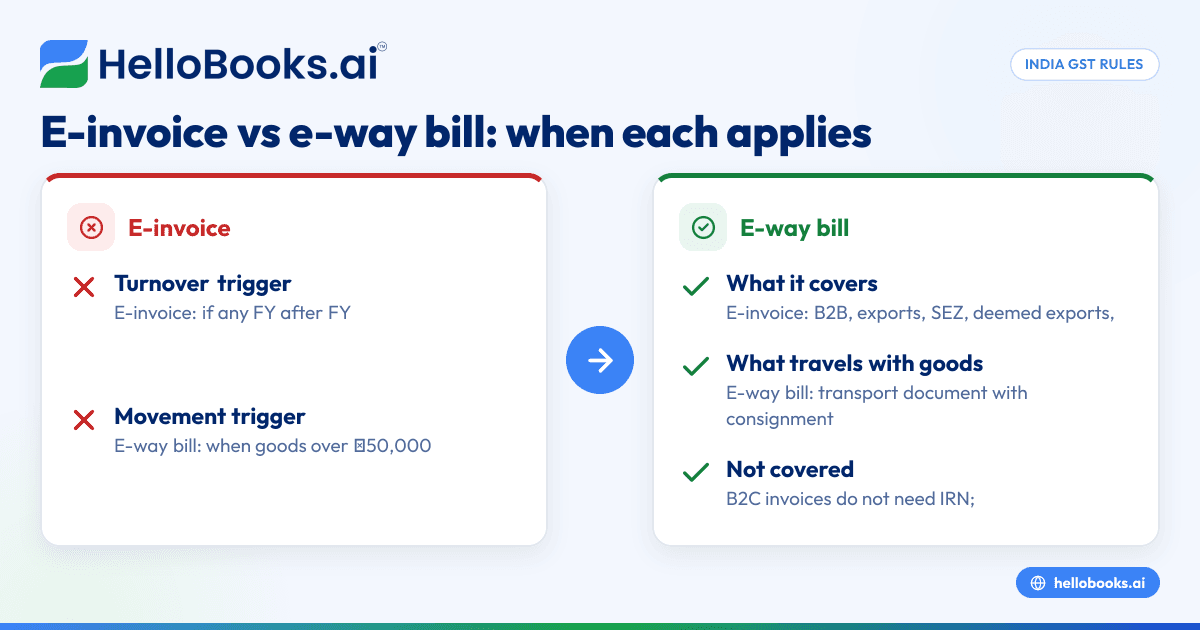
India ਵਿੱਚ GST ਹੇਠ e-invoice ਤੇ e-way bill ਵੱਖ-ਵੱਖ ਕੰਮ ਲਈ ਹੁੰਦੇ ਹਨ: e-invoice ਇਸ ਗੱਲ ਬਾਰੇ ਹੈ ਕਿ ਕੁਝ ਰਜਿਸਟਰਡ ਕਾਰੋਬਾਰ ਆਪਣੇ B2B tax invoice ਨੂੰ GSTN ਦੇ Invoice Registration Portal ਰਾਹੀਂ IRN ਅਤੇ signed QR ਨਾਲ ਰਜਿਸਟਰ ਕਰਨ; e-way bill ਇਸ ਗੱਲ ਬਾਰੇ ਹੈ ਕਿ ਮਾਲ ਦੀ ਚੱਲ ਰਹੀ ਹਿਲਜਲ ਲਈ ਦਸਤਾਵੇਜ਼ ਚਾਹੀਦਾ ਹੈ ਜਾਂ ਨਹੀਂ। ਕਈ ਵਾਰ ਤੁਹਾਨੂੰ ਦੋਵੇਂ ਚਾਹੀਦੇ ਹਨ, ਕਈ ਵਾਰ ਸਿਰਫ਼ ਇੱਕ, ਅਤੇ service business ਨੂੰ ਅਕਸਰ e-way bill ਦੀ ਲੋੜ ਹੀ ਨਹੀਂ ਪੈਂਦੀ।
ਪਹਿਲਾਂ ਇਹ ਸਮਝੋ: invoice compliance ਅਤੇ goods movement compliance ਇੱਕੋ ਨਹੀਂ
ਪੰਜਾਬ, ਮਹਾਰਾਸ਼ਟਰ ਜਾਂ ਕਰਨਾਟਕ ਵਿੱਚ ਕੰਮ ਕਰ ਰਹੇ ਕਿਸੇ ਵੀ GST-registered business ਲਈ ਸਭ ਤੋਂ ਵੱਡੀ ਗਲਤੀ ਇਹ ਹੈ ਕਿ ਉਹ e-invoice ਨੂੰ transport document ਸਮਝ ਲੈਂਦਾ ਹੈ, ਜਾਂ e-way bill ਨੂੰ tax invoice ਦੀ ਥਾਂ ਮੰਨ ਲੈਂਦਾ ਹੈ। ਦੋਵੇਂ ਵੱਖਰੇ ਕਾਨੂੰਨੀ ਮਕਸਦ ਨਿਭਾਉਂਦੇ ਹਨ।
E-invoicing ਦਾ ਮੂਲ ਢਾਂਚਾ Central Goods and Services Tax Act, 2017 ਅਤੇ CGST Rules ਹੇਠ ਬਣਦਾ ਹੈ, ਅਤੇ ਇਸ ਦੀ ਚੱਲਦੀ implementation CBIC ਅਤੇ GSTN ਦੀਆਂ notifications, advisories ਅਤੇ IRP documentation ਰਾਹੀਂ ਵੇਖੀ ਜਾਂਦੀ ਹੈ। ਮੌਜੂਦਾ coverage, category-wise carve-outs, schema, validation rules ਅਤੇ operational advisories GST Portal ਅਤੇ GSTN/IRP ਦੀਆਂ official publications ਵਿੱਚ ਮਿਲਦੀਆਂ ਹਨ.
E-way bill ਦਾ framework ਵੀ CGST Act, 2017 ਅਤੇ CGST Rules ਹੇਠ ਹੈ, ਅਤੇ ਇਸ ਦੀ compliance CBIC, GST authorities ਅਤੇ e-way bill system ਦੀ official guidance ਰਾਹੀਂ ਚੱਲਦੀ ਹੈ। Inter-state movement ਲਈ ਕੇਂਦਰੀ rules ਮਹੱਤਵਪੂਰਨ ਹਨ; intra-state movement ਵਿੱਚ state-specific notifications ਵੀ relevant ਹੋ ਸਕਦੀਆਂ ਹਨ, ਇਸ ਲਈ ਆਪਣੀ state GST notification ਵੀ ਦੇਖਣੀ ਪੈਂਦੀ ਹੈ.
ਇਸ ਨੂੰ ਆਸਾਨ ਪੰਜਾਬੀ ਵਿੱਚ ਐਦਾਂ ਯਾਦ ਰੱਖੋ:
- e-invoice: “ਕੀ ਇਹ invoice IRP ਤੇ register ਹੋਣਾ ਸੀ?”
- e-way bill: “ਕੀ ਇਹ ਮਾਲ ਜਦੋਂ truck, van ਜਾਂ ਹੋਰ mode ਨਾਲ ਚੱਲਿਆ ਤਾਂ ਉਸ movement ਲਈ EWB ਬਣਨਾ ਸੀ?”
ਕਿਹੜੇ ਕਾਰੋਬਾਰ ਨੂੰ e-invoicing ਵਿੱਚ ਆਉਣਾ ਪੈਂਦਾ ਹੈ
ਹਰ business ਲਈ e-invoicing ਨਹੀਂ ਹੁੰਦੀ। ਇਹ ਆਮ ਤੌਰ 'ਤੇ turnover-based applicability ਦਾ ਮਾਮਲਾ ਹੈ, ਪਰ ਇੱਥੇ bare number ਲਿਖ ਕੇ rule ਦੱਸਣਾ ਠੀਕ ਨਹੀਂ, ਕਿਉਂਕਿ applicability time to time CBIC notifications ਅਤੇ GSTN advisories ਰਾਹੀਂ update ਹੁੰਦੀ ਰਹਿੰਦੀ ਹੈ। ਇਸ ਲਈ ਜੋ current threshold, category exclusions, date of effect ਜਾਂ special conditions ਹਨ, ਉਹ CBIC notification archive, GST Portal, ਅਤੇ Invoice Registration Portal 'ਤੇ published current documents ਵਿੱਚ verify ਕਰੋ.
ਕੁਝ practical points:
- Test ਆਮ ਤੌਰ 'ਤੇ business ਦੇ aggregate turnover ਨਾਲ ਜੁੜਿਆ ਹੁੰਦਾ ਹੈ, ਸਿਰਫ਼ ਇੱਕ GSTIN ਦੀ current month sale ਨਾਲ ਨਹੀਂ.
- Applicability check ਕਰਦੇ ਸਮੇਂ finance team ਨੂੰ historical turnover record, GST registration profile ਅਤੇ entity structure ਇਕੱਠੇ ਦੇਖਣੇ ਪੈਂਦੇ ਹਨ.
- ਕੁਝ sectors ਜਾਂ persons ਲਈ exclusions ਹੋ ਸਕਦੀਆਂ ਹਨ; ਉਹ current law text ਅਤੇ notification ਤੋਂ ਹੀ confirm ਕਰੋ.
- E-invoicing ਲਾਗੂ ਹੋਣ 'ਤੇ ਹਰ invoice ਨਹੀਂ, ਸਗੋਂ ਉਹ documents ਵੇਖਣੇ ਹੁੰਦੇ ਹਨ ਜੋ notified scope ਵਿੱਚ ਆਉਂਦੇ ਹਨ, ਜਿਵੇਂ B2B supplies, export documents, debit/credit notes where applicable under current rules.
ਜੇ ਤੁਹਾਡਾ business multiple states ਵਿੱਚ GSTINs ਨਾਲ ਕੰਮ ਕਰਦਾ ਹੈ—ਮਿਸਾਲ ਲਈ ਦਿੱਲੀ, ਪੰਜਾਬ ਅਤੇ ਹਰਿਆਣਾ—ਤਾਂ compliance decision head office ਦੀ feeling ਨਾਲ ਨਹੀਂ, entity-level records ਨਾਲ ਹੋਵੇਗਾ। ਇਸੇ ਲਈ ਕਈ teams multi-GSTIN books ਇੱਕੋ system ਵਿੱਚ ਰੱਖਣਾ ਚਾਹੁੰਦੀਆਂ ਹਨ, ਤਾਂ ਜੋ ਕਿਹੜੇ GSTIN ਤੋਂ invoice ਬਣਿਆ, ਕਿੱਥੇ IRN ਲੱਗਣਾ ਹੈ, ਤੇ ਕਿੱਥੇ place of supply ਦੇ ਮੁਤਾਬਕ IGST ਜਾਂ CGST/SGST split ਹੋਣਾ ਹੈ, ਇਹ manually ਨਾ ਟੁਟੇ। HelloBooks ਵਿੱਚ ਇਹ India-specific GST invoicing ਅਤੇ e-invoicing workflow ਇਸ ਗੜਬੜ ਨੂੰ ਘਟਾ ਸਕਦਾ ਹੈ.
e-way bill ਕਦੋਂ ਲੱਗਦਾ ਹੈ: sale ਤੋਂ ਵੱਧ movement ਨੂੰ ਦੇਖੋ
E-way bill ਦੀ logic invoice ਤੋਂ ਨਹੀਂ, movement of goods ਤੋਂ ਸ਼ੁਰੂ ਹੁੰਦੀ ਹੈ। ਜੇ goods ਚੱਲ ਰਹੇ ਹਨ, ਤਾਂ ਸਵਾਲ ਉੱਠਦਾ ਹੈ ਕਿ ਕੀ ਇਸ movement ਲਈ e-way bill ਬਣੇਗਾ। Current value limits, exceptions, exempt goods lists, transporter rules, validity framework ਅਤੇ state-wise intra-state variations official e-way bill portal, GST Portal ਅਤੇ applicable CBIC/state GST notifications ਵਿੱਚ published ਹਨ.
ਇਹ ਹਾਲਤਾਂ ਅਕਸਰ businesses miss ਕਰ ਜਾਂਦੇ ਹਨ:
- stock transfer between branches
- job work ਲਈ goods ਭੇਜਣਾ
- approval basis 'ਤੇ goods dispatch ਕਰਨਾ
- sales return ਵਾਲਾ movement
- exhibition ਜਾਂ demo ਲਈ dispatch
- purchase return ਜਾਂ inward movement in certain circumstances
Service invoice ਆਪਣੇ ਆਪ e-way bill ਨਹੀਂ ਬਣਾਉਂਦਾ, ਕਿਉਂਕਿ e-way bill goods movement ਨਾਲ ਜੁੜਿਆ ਹੈ। ਪਰ ਇੱਕ trader ਜਾਂ manufacturer ਲਈ B2C sale ਵੀ e-way bill trigger ਕਰ ਸਕਦੀ ਹੈ, ਜੇ movement of goods rule ਦੇ scope ਵਿੱਚ ਆਉਂਦੀ ਹੋਵੇ—even where e-invoicing may not apply to that particular invoice.
ਇਹੀ ਉਹ ਜਗ੍ਹਾ ਹੈ ਜਿੱਥੇ accounts team ਅਤੇ dispatch team ਵੱਖਰੇ answers ਦਿੰਦੇ ਹਨ। Accounts ਵੇਖਦੀ ਹੈ tax invoice; warehouse ਵੇਖਦਾ ਹੈ carton, challan, vehicle number ਅਤੇ transporter. Compliance ਲਈ ਦੋਵੇਂ ਦੀ language ਇੱਕੋ ਹੋਣੀ ਚਾਹੀਦੀ ਹੈ.
ਅਜਿਹੀਆਂ ਹਾਲਤਾਂ ਜਿੱਥੇ ਇੱਕ ਚੀਜ਼ ਲੱਗੇਗੀ, ਦੂਜੀ ਨਹੀਂ
ਦਫ਼ਤਰ ਵਿੱਚ ਅਸਲ confusion ਇੱਥੇ ਹੁੰਦੀ ਹੈ। ਚਲੋ plain-language situations ਵੇਖੀਏ.
ਸਿਰਫ਼ e-invoice, e-way bill ਨਹੀਂ
ਜੇ ਤੁਸੀਂ pure services ਦੀ B2B supply ਕਰਦੇ ਹੋ ਅਤੇ ਤੁਹਾਡਾ business notified e-invoicing scope ਵਿੱਚ ਹੈ, ਤਾਂ invoice ਨੂੰ IRN ਲੱਗ ਸਕਦਾ ਹੈ, ਪਰ e-way bill ਨਹੀਂ, ਕਿਉਂਕਿ ਕੋਈ goods move ਨਹੀਂ ਹੋ ਰਹੇ।
ਮਾਨ ਲਓ ਇੱਕ Chandigarh-based software consultancy ਨੇ ਇੱਕ client ਨੂੰ annual implementation fee ਦਾ invoice ਕੱਢਿਆ। ਜੇ entity e-invoicing scope ਵਿੱਚ ਹੈ, ਤਾਂ current law ਦੇ ਮੁਤਾਬਕ IRP reporting ਦੀ ਲੋੜ ਹੋ ਸਕਦੀ ਹੈ. ਪਰ truck, courier, e-way bill ਵਾਲਾ ਸਵਾਲ ਨਹੀਂ ਉੱਠੇਗਾ.
ਸਿਰਫ਼ e-way bill, e-invoice ਨਹੀਂ
ਇੱਕ ਛੋਟਾ trader ਜਾਂ retailer notified e-invoicing scope ਵਿੱਚ ਨਹੀਂ ਆਉਂਦਾ, ਪਰ ਉਹ goods dispatch ਕਰਦਾ ਹੈ। ਐਸੇ ਵਿੱਚ movement rules trigger ਹੋਣ 'ਤੇ e-way bill ਲੱਗ ਸਕਦਾ ਹੈ, ਭਾਵੇਂ invoice ਨੂੰ IRN ਦੀ ਲੋੜ ਨਾ ਹੋਵੇ.
ਦੋਵੇਂ ਲੱਗ ਸਕਦੇ ਹਨ
Manufacturer notified e-invoicing scope ਵਿੱਚ ਹੈ, ਅਤੇ ਉਹ B2B sale ਲਈ goods dispatch ਕਰ ਰਿਹਾ ਹੈ। Invoice IRP ਤੇ register ਹੋ ਸਕਦਾ ਹੈ, IRN ਅਤੇ signed QR generate ਹੋ ਸਕਦੇ ਹਨ, ਅਤੇ goods movement ਲਈ e-way bill ਵੀ ਲੱਗ ਸਕਦਾ ਹੈ.
ਕੋਈ ਵੀ ਨਹੀਂ
ਕੁਝ exempt goods, specific exception cases, very small movements, or situations specifically carved out by rule ਵਿੱਚ ਨਾ e-invoice trigger ਹੁੰਦੀ ਹੈ ਨਾ e-way bill. ਪਰ ਇਹ conclusion tabhi ਲਓ ਜਦੋਂ current notification text ਵੇਖ ਲਓ.
dispatch ਟੀਮ ਨੂੰ ਕਿਹੜਾ document flow ਮੈਪ ਕਰਨਾ ਚਾਹੀਦਾ ਹੈ
Indian SME ਵਿੱਚ problem ਅਕਸਰ law ਨਹੀਂ, sequence ਹੁੰਦਾ ਹੈ। ਟੀਮ ਨੂੰ ਪਤਾ ਨਹੀਂ ਹੁੰਦਾ ਪਹਿਲਾਂ ਕੀ ਬਣੇਗਾ, ਫਿਰ ਕੀ, ਅਤੇ return ਵਿੱਚ ਕੀ reflect ਹੋਣਾ ਹੈ। Practical flow ਆਮ ਤੌਰ 'ਤੇ ਕੁਝ ਐਸਾ ਹੁੰਦਾ ਹੈ:
- Customer master ਵਿੱਚ GSTIN, address, state code ਅਤੇ place of supply ਸਹੀ ਹੋਣ.
- Invoice ਬਣੇ, ਜਿਸ ਵਿੱਚ HSN/SAC, tax head split, taxable value, and party type ਸਹੀ capture ਹੋਵੇ.
- ਜੇ document notified e-invoicing scope ਵਿੱਚ ਹੈ, ਤਾਂ IRP ਤੋਂ IRN ਅਤੇ signed QR ਮਿਲੇ.
- ਜੇ goods move ਹੋ ਰਹੇ ਹਨ ਅਤੇ rule trigger ਹੁੰਦਾ ਹੈ, ਤਾਂ e-way bill generate ਹੋਵੇ.
- Dispatch, transporter details ਅਤੇ supporting document alignment ਰਹੇ.
- Return filing ਸਮੇਂ invoice data ਅਤੇ outward supplies figures GSTR-1 ਅਤੇ GSTR-3B ਵਿੱਚ ਮਿਲਣ.
ਇੱਥੇ software ਦੀ utility tab samajh aati hai ਜਦੋਂ ਇੱਕੋ entry ਤੋਂ ਕੰਮ ਅੱਗੇ ਵਧੇ। ਜੇ invoice ਪਹਿਲਾਂ ਹੀ GST-compliant ਤਰੀਕੇ ਨਾਲ ਬਣਿਆ ਹੋਵੇ, place of supply ਤੋਂ tax head split automatically sensible ਹੋਵੇ, ਅਤੇ notified case ਵਿੱਚ IRN/QR ਉਹੀ record ਨਾਲ attach ਹੋ ਜਾਵੇ, ਤਾਂ team duplicate typing ਘਟਾ ਲੈਂਦੀ ਹੈ। Goods dispatch ਵਾਲੇ ਕੇਸਾਂ ਵਿੱਚ e-way bill invoice record ਤੋਂ ਹੀ ਬਣ ਜਾਵੇ, ਤਾਂ warehouse ਅਤੇ accounts ਵੱਖਰੇ Excel ਨਾ ਚਲਾਉਣ.
HelloBooks ਇਸ ਕਿਸਮ ਦੇ flow ਵਿੱਚ relevant ਹੈ, ਕਿਉਂਕਿ India market ਲਈ invoice ਤੋਂ e-invoicing ਅਤੇ e-way bill ਨੂੰ ਜੋੜ ਕੇ outward supply records GSTR-1 ਅਤੇ GSTR-3B filing ਤੱਕ ਲੈ ਜਾਣਾ practical ਬਣ ਜਾਂਦਾ ਹੈ.
ਪੰਜਾਬੀ-ਹਕੀਕਤ ਵਾਲੀਆਂ ਹਾਲਤਾਂ: Ludhiana, Mohali, Surat, Jaipur ਵਾਲਾ ground truth
India ਦੇ compliance rules national ਹਨ, ਪਰ mistakes local practice ਵਿੱਚ ਹੁੰਦੀਆਂ ਹਨ.
Ludhiana ਦਾ hosiery manufacturer ਅਕਸਰ branch transfer ਨੂੰ “sale ਨਹੀਂ, ਇਸ ਲਈ document ਨਹੀਂ” ਸਮਝ ਲੈਂਦਾ ਹੈ। ਪਰ e-way bill question sale ਤੋਂ ਵੱਡਾ ਹੈ; goods movement ਨੂੰ rule ਦੇ context ਵਿੱਚ ਦੇਖਣਾ ਪੈਂਦਾ ਹੈ.
Mohali ਦੀ IT services company ਨੂੰ lagta ਹੈ ਕਿ “ਅਸੀਂ GST invoice ਕੱਢ ਦਿੱਤਾ, ਇਸ ਕਰਕੇ e-way bill ਦਾ ਵੀ ਕੋਈ ਨਾ ਕੋਈ part ਹੋਵੇਗਾ।” ਨਹੀਂ—services movement of goods ਨਹੀਂ ਬਣਾਉਂਦੀਆਂ.
Surat ਦਾ textile trader Tally ਵਿੱਚ invoice ਕੱਢਦਾ ਹੈ, warehouse side ਤੇ ਵੱਖਰਾ portal entry ਕਰਦਾ ਹੈ, ਫਿਰ month end ਵਿੱਚ GSTR-1 mismatch ਵੇਖਦਾ ਹੈ. ਇੱਥੇ issue ਕਾਨੂੰਨ ਦਾ ਨਹੀਂ, fragmented workflow ਦਾ ਹੈ. ਇਸ ਲਈ ਕੁਝ businesses tally-alternative ਜਾਂ compare/hellobooks-vs-tally ਵਰਗੀਆਂ options ਵੇਖਦੇ ਹਨ, ਖ਼ਾਸ ਕਰਕੇ ਜਦੋਂ multi-user team, inventory ਅਤੇ GST compliance ਇੱਕੋ ਜਗ੍ਹਾ ਚਾਹੀਦੀ ਹੋਵੇ.
Jaipur ਜਾਂ Indore ਦਾ wholesaler UPI, NEFT, RTGS ਅਤੇ IMPS ਰਾਹੀਂ receipts ਲੈਂਦਾ ਹੈ, ਪਰ bank statement upload ਨਾ ਕਰਨ ਕਰਕੇ invoice-to-payment trail loose ਹੋ ਜਾਂਦੀ ਹੈ. ਫਿਰ dispatch proof, receivable ageing, ਅਤੇ GST outward records ਵਿੱਚ confusion ਵੱਧ ਜਾਂਦੀ ਹੈ. Bank statement upload ਅਤੇ AI reconciliation ਇਸ ਲਈ useful ਹੁੰਦਾ ਹੈ ਕਿ ਰੁਪਏ ਦੀ receipt party invoice ਨਾਲ ਮਿਲੇ, ਨਾ ਕਿ sirf accountant ਦੀ memory ਨਾਲ.
ਇੱਕ invented illustrative ਹਿਸਾਬ, ਸਿਰਫ਼ logic ਸਮਝਾਉਣ ਲਈ
ਹੇਠਾਂ ਵਾਲੇ ਅੰਕ illustrative ਅਤੇ invented ਹਨ। ਇਹ current legal threshold ਜਾਂ official valuation rule ਦਾ substitute ਨਹੀਂ ਹਨ, ਅਤੇ actual exemption lists, state-specific notifications, transporter exceptions, distance rules, and document-type nuances ਨੂੰ simplify ਕਰਦੇ ਹਨ.
ਮਾਨ ਲਓ Amritsar ਦੀ ਇੱਕ electrical goods firm “A” ਨੇ Bengaluru ਦੇ registered buyer ਨੂੰ ₹8,40,000 ਦੀ taxable goods supply ਦਾ invoice ਬਣਾਇਆ। ਇਹ figure invented ਹੈ, ਸਿਰਫ਼ flow ਸਮਝਾਉਣ ਲਈ। Firm “A” notified e-invoicing scope ਵਿੱਚ ਮੰਨ ਲਈਏ. ਇਸ ਹਾਲਤ ਵਿੱਚ practical compliance questions ਇਹ ਹੋਣਗੇ:
- Buyer registered ਹੈ, ਤਾਂ B2B invoice ਹੈ.
- Supply inter-state ਮੰਨ ਲਈਏ, ਤਾਂ place of supply ਅਤੇ tax head split ਵਿੱਚ IGST ਆ ਸਕਦਾ ਹੈ, subject to actual facts and law.
- Notified e-invoicing scope ਮੰਨਣ ਕਰਕੇ invoice ਨੂੰ IRP reporting, IRN ਅਤੇ signed QR ਦੀ ਲੋੜ ਹੋ ਸਕਦੀ ਹੈ.
- Goods truck ਰਾਹੀਂ dispatch ਹੋ ਰਹੇ ਹਨ, ਇਸ ਲਈ e-way bill question ਵੀ trigger ਹੋਵੇਗਾ, subject to current movement rules.
ਹੁਣ ਇੱਕ ਹੋਰ invented situation ਲਓ: Mohali ਦੀ consulting firm “B” ਨੇ Delhi client ਨੂੰ ₹2,20,000 ਦਾ professional fee invoice ਬਣਾਇਆ। ਇਹ figure ਵੀ invented ਹੈ. ਜੇ entity e-invoicing scope ਵਿੱਚ ਹੈ, ਤਾਂ invoice IRP ਨਾਲ ਜੁੜ ਸਕਦਾ ਹੈ. ਪਰ ਕਿਉਂਕਿ goods move ਨਹੀਂ ਹੋ ਰਹੇ, e-way bill ਦੀ practical need ਨਹੀਂ ਬਣੇਗੀ.
ਅਤੇ ਤੀਜਾ invented case: Jalandhar ਦਾ small furniture dealer “C” e-invoicing scope ਵਿੱਚ ਨਹੀਂ ਹੈ ਮੰਨ ਲਓ, ਪਰ ਉਹ ₹76,000 worth invented consignment local transporter ਨਾਲ ਭੇਜ ਰਿਹਾ ਹੈ। ਇੱਥੇ IRN ਦਾ ਸਵਾਲ ਨਹੀਂ, ਪਰ e-way bill applicability ਦਾ ਸਵਾਲ ਜ਼ਰੂਰ ਉੱਠੇਗਾ, subject to current state and central rules.
ਇਹ ਤਿੰਨ invented cases ਇੱਕ ਗੱਲ ਦੱਸਦੇ ਹਨ: invoice ਦੀ value, turnover, goods movement, buyer type, state, and document type—ਸਾਰੇ ਮਿਲ ਕੇ answer ਦਿੰਦੇ ਹਨ. ਇੱਕ single thumb rule ਕਾਫ਼ੀ ਨਹੀਂ.
finance ਅਤੇ tax team ਕਿੱਥੇ ਅਕਸਰ ਫਸ ਜਾਂਦੇ ਹਨ
ਸਭ ਤੋਂ common pain points ਇਹ ਹਨ:
1) GSTIN master data ਗਲਤ
ਜੇ customer ਦਾ GSTIN, legal name, state code ਜਾਂ registration type ਗਲਤ ਹੈ, ਤਾਂ invoice ਵੀ ਗਲਤ, IRN validation ਵੀ ਗਲਤ, ਅਤੇ return data ਵੀ ਗਲਤ ਹੋ ਸਕਦਾ ਹੈ. Verification ਲਈ GSTIN validator ਵਰਗਾ tool ਪਹਿਲਾਂ ਹੀ use ਕਰਨਾ practical ਹੈ.
2) place of supply ਗਲਤ
Local supply ਨੂੰ inter-state ਜਾਂ inter-state ਨੂੰ local treat ਕਰਨਾ CGST/SGST বনਾਮ IGST split ਦੀ classic error ਹੈ. ਇਹ ਸਿਰਫ਼ tax line error ਨਹੀਂ; downstream reconciliation, customer dispute ਅਤੇ GSTR-1 reporting issue ਬਣ ਜਾਂਦੀ ਹੈ.
3) OCR ਜਾਂ purchase discipline ਨਾ ਹੋਣਾ
Outward side ਸਹੀ ਹੋਵੇ ਪਰ inward bills scattered ਹੋਣ, ਤਾਂ GSTR-2A/2B reconciliation ਅਤੇ ITC tracking weak ਹੋ ਜਾਂਦੀ ਹੈ. E-invoice/e-way bill article ਵਿੱਚ ਵੀ ਇਹ relevant ਹੈ, ਕਿਉਂਕਿ books fragmented ਹੋਣ ਤਾਂ compliance isolated task ਬਣ ਜਾਂਦਾ ਹੈ. Purchase bills ਦਾ OCR capture ਅਤੇ GSTR-2B tracking broader control ਦਿੰਦੇ ਹਨ.
4) dispatch team ਅਤੇ accountant ਵੱਖਰੀ language ਬੋਲਣ
Warehouse challan number ਹੋਰ record ਕਰਦਾ ਹੈ, accountant invoice number ਹੋਰ. Month-end ਤੇ mismatch. Inventory-linked invoicing ਇਹ gap ਘਟਾ ਸਕਦੀ ਹੈ.
5) bank receipt trail missing
Buyer ਨੇ rupee payment NEFT ਜਾਂ UPI ਰਾਹੀਂ ਕਰ ਦਿੱਤੀ, ਪਰ books ਵਿੱਚ open receivable ਪਈ ਹੈ. ਫਿਰ team customer dispute ਵਿੱਚ ਫਸਦੀ ਹੈ ਕਿ invoice paid ਸੀ ਜਾਂ ਨਹੀਂ. bank reconciliation software style workflow ਨਾਲ uploaded bank statement ਤੋਂ matching ਹੋ ਸਕਦੀ ਹੈ.
HelloBooks ਨਾਲ ਇਹ process India context ਵਿੱਚ ਕਿਵੇਂ ਸਾਫ਼ ਹੋ ਸਕਦਾ ਹੈ
ਜੇ ਤੁਹਾਡਾ ਸਵਾਲ ਸਿਰਫ਼ “ਕਦੋਂ ਲੱਗਦਾ ਹੈ?” ਤੋਂ ਅੱਗੇ ਜਾ ਕੇ “team ਗਲਤੀ ਘੱਟ ਕਿਵੇਂ ਕਰੇ?” ਹੈ, ਤਾਂ workflow matter ਕਰਦਾ ਹੈ.
HelloBooks ਵਿੱਚ GST invoice ਬਣਾਉਂਦੇ ਸਮੇਂ party GSTIN, place of supply, HSN/SAC ਅਤੇ CGST/SGST ਜਾਂ IGST split ਨੂੰ ਇੱਕੋ entry ਵਿੱਚ ਸੰਭਾਲਣਾ ਆਸਾਨ ਹੁੰਦਾ ਹੈ; notified cases ਵਿੱਚ e-invoicing ਲਈ IRN ਅਤੇ signed QR ਉਸੇ process ਵਿੱਚ ਆ ਸਕਦੇ ਹਨ; goods movement ਵਾਲੇ dispatch ਵਿੱਚ e-way bill ਉਹੀ invoice context ਤੋਂ ਬਣ ਸਕਦਾ ਹੈ। ਇਸ ਨਾਲ accounts, dispatch ਅਤੇ compliance ਤਿੰਨੋ ਟੁਕੜਿਆਂ ਵਿੱਚ ਨਹੀਂ ਟੁਟਦੇ.
ਅੱਗੇ, outward data ਤੋਂ gst-return-filing-software flow ਵਿੱਚ GSTR-1 ਅਤੇ GSTR-3B direct filing useful ਹੈ, ਕਿਉਂਕਿ invoice books ਅਤੇ return figures ਦੇ ਵਿਚਕਾਰ manual re-entry ਘਟਦੀ ਹੈ। Inventory-based businesses ਲਈ inventory linkage stock movement ਨੂੰ sales/purchase entries ਨਾਲ ਜੋੜ ਕੇ ਰੱਖਦੀ ਹੈ. ਜਿਹੜੇ businesses Tally ਤੋਂ shift ਸੋਚ ਰਹੇ ਹਨ ਜਾਂ hybrid stage ਵਿੱਚ ਹਨ, ਉਹ compare/hellobooks-vs-tally ਵੇਖ ਸਕਦੇ ਹਨ. Broader India setup ਲਈ accounting-software-india ਜਾਂ e-invoicing-software context ਵੀ ਵੇਖਿਆ ਜਾ ਸਕਦਾ ਹੈ. Pricing detail ਲਈ ਸਿੱਧਾ /in/pricing ਵੇਖੋ.
ਕਿਹੜੇ official source ਤੋਂ current answer verify ਕਰਨਾ ਚਾਹੀਦਾ ਹੈ
ਕਿਉਂਕਿ e-invoicing ਅਤੇ e-way bill ਦੇ current thresholds, exemptions, category coverage, operational restrictions, and date-based changes ਬਦਲ ਸਕਦੇ ਹਨ, final check ਹਮੇਸ਼ਾਂ official source ਤੋਂ ਕਰੋ:
- CBIC notifications and circulars under the CGST Act, 2017 and CGST Rules
- GST Portal advisories and help content
- GSTN / IRP documentation for e-invoice schema, validation and reporting rules
- official e-way bill system guidance for movement-related compliance
- intra-state movement ਲਈ relevant state GST notification, ਜੇ local variation ਹੋਵੇ
ਜੇ ਤੁਹਾਡੇ business ਵਿੱਚ MCA-registered company structure, multiple GSTINs, TDS entries, reverse charge cases, export dispatches, SEZ transactions ਜਾਂ complex stock transfers ਹਨ, ਤਾਂ internal accounts rule of thumb ਨਾਲ ਨਹੀਂ, CA ਜਾਂ GST practitioner ਨਾਲ document flow review ਕਰਵਾਉਣਾ ਚਾਹੀਦਾ ਹੈ. DPDP, RBI payment rules, Companies Act reporting, ਅਤੇ Income-tax Act ਵਾਲੇ records side issues ਹੋ ਸਕਦੇ ਹਨ, ਪਰ e-invoice/e-way bill ਦਾ direct answer ਫਿਰ ਵੀ GST law ਤੋਂ ਹੀ ਆਵੇਗਾ.
ਅਖੀਰਲੀ ਗੱਲ ਸਾਦੀ ਹੈ: e-invoice buyer-facing tax document validation ਹੈ; e-way bill goods movement control ਹੈ. ਜੇ ਤੁਸੀਂ ਇਹ ਦੋ ਸਵਾਲ ਵੱਖਰੇ ਰੱਖ ਲਏ—“ਕੀ invoice IRP ਤੇ ਜਾਣਾ ਸੀ?” ਅਤੇ “ਕੀ goods movement ਲਈ EWB ਲੱਗਣਾ ਸੀ?”—ਤਾਂ compliance ਅੱਧੀ ਆਸਾਨ ਹੋ ਜਾਂਦੀ ਹੈ.


