


Key takeaways
What this article covers, in order:
- Credit note, debit note, amendment: எது எப்போது?
- ஒரு note சட்டப்படி செல்லுபடியாக இருக்க என்ன வேண்டும்?
- GSTR-1 மற்றும் GSTR-3B-ல் notes, amendments எப்படி பிரதிபலிக்கும்?
- Credit note எப்போது tax liability-யை உண்மையில் குறைக்கும்?
- Place of supply, GSTIN, tax head errors: amendment தான் சரியான வழி
- ஒரு நேர்மையான illustrative கணக்கு
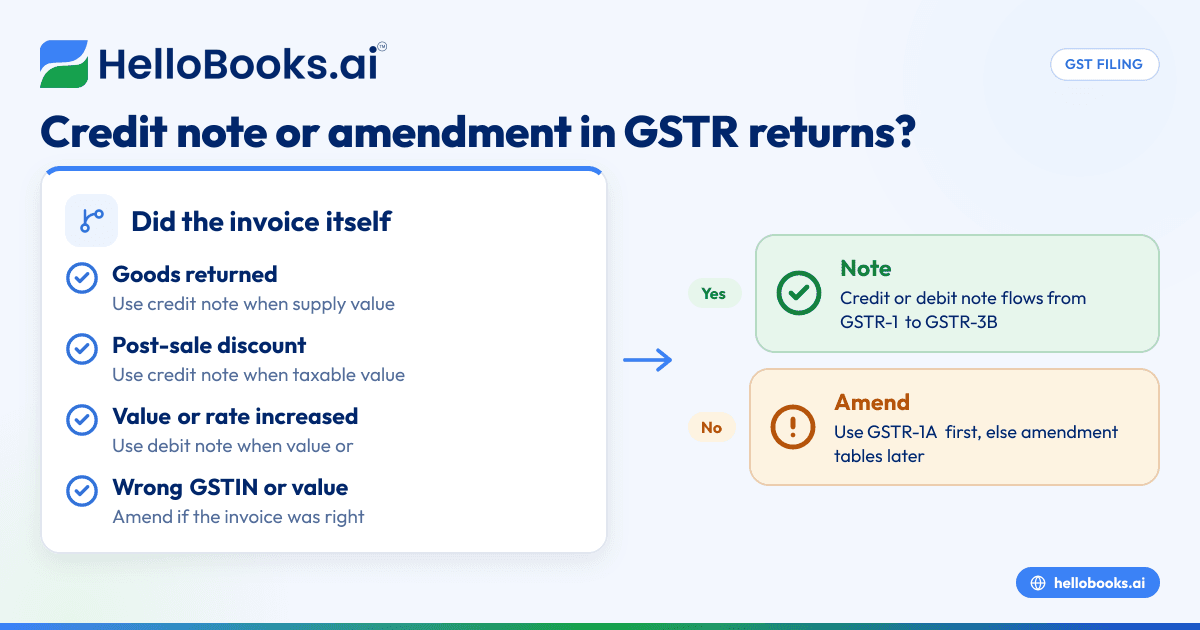
India-வில் GST ரிட்டர்னில் ஒரு invoice வெளியிட்ட பிறகு deal மாறியிருந்தால் credit note அல்லது debit note வேண்டும்; ஆனால் invoice சரியாக இருந்தும் GST Portal-ல் report செய்த தகவல்தான் தவறாக இருந்தால் amendment வேண்டும். சுருக்கமாக: goods return, post-sale discount, value reduction என்றால் credit note; value increase அல்லது short charge என்றால் debit note; GSTIN, place of supply, invoice value, tax head split போன்ற reporting error என்றால் GSTR-1 amendment. இதை சரியாகப் பிரித்தால்தான் CBIC சட்டத்தின் கீழ் liability, ITC, reconciliation எல்லாம் சீராக இருக்கும்.
Credit note, debit note, amendment: எது எப்போது?
GST-ல் இந்த மூன்றையும் ஒரே மாதிரி நினைப்பது பெரிய தவறு. இந்தியாவில் CGST Act, 2017-ன் Section 34 credit note மற்றும் debit note-ஐ govern செய்கிறது; return reporting structure GSTN நடத்தும் GST Portal-ல் publish செய்யப்படுகிறது, மேலும் CBIC notifications மற்றும் advisories வழியாக current treatment வெளியிடப்படுகிறது.
பயன்பாட்டை எளிதாக நினைவில் வைத்துக் கொள்ள ஒரு நடைமுறை விதி:
- Commercial reality மாறியது என்றால் note.
- Return reporting தவறியது என்றால் amendment.
அதாவது:
- customer goods திருப்பி அனுப்பினார்
- supply quantity குறைந்தது
- after-sale discount contract-படி கொடுக்கப்பட்டது
- taxable value குறைக்க வேண்டிய நிலை வந்தது
இவற்றில் credit note பொருந்தும்.
மாறாக:
- கூடுதல் quantity பின்னர் bill செய்ய வேண்டும்
- original invoice-ல் value குறைவாக எடுத்துவிட்டீர்கள்
- tax short charged
இவற்றில் debit note பொருந்தும்.
ஆனால்,
- buyer GSTIN தவறாக report ஆகிவிட்டது
- place of supply தவறாக போயுள்ளது
- interstate sale-க்கு CGST/SGST போய் விட்டது, அல்லது intrastate sale-க்கு IGST போயுள்ளது
- invoice number/date/value typo-வாக GSTR-1-ல் report செய்துள்ளீர்கள்
இவை amendment விஷயங்கள்.
இங்கே place of supply முக்கியம். India-வில் IGST Act மற்றும் CGST/SGST framework-கீழ் tax head split supply nature-ஐப் பொறுத்தது. அதனால் invoice issue செய்யும்போதே சரியான GSTIN, state code, place of supply, CGST/SGST அல்லது IGST split சரியாக இருக்க வேண்டும். இந்தப் பிழை recurring ஆக இருந்தால் smart invoicing மற்றும் gst-return-filing-software போன்ற workflow-கள் வேலை குறைக்கும், ஏனெனில் invoice data-விலிருந்தே return build ஆகும்.
ஒரு note சட்டப்படி செல்லுபடியாக இருக்க என்ன வேண்டும்?
Credit note அல்லது debit note என்பது “discount slip” மாதிரி informal document அல்ல. அதன் contents என்ன என்பதற்கான current legal requirements CGST Act, 2017, அதற்கு உட்பட்ட CGST Rules, மற்றும் CBIC வெளியிடும் updated rules/notifications-ல் publish செய்யப்படுகின்றன. நடைமுறையில், valid note-ல் பொதுவாக பின்வரும் வகை தகவல்கள் traceable ஆக இருக்க வேண்டும்:
- supplier பெயர், முகவரி, GSTIN
- unique serial number
- issue date
- recipient details; registered buyer என்றால் buyer GSTIN
- original tax invoice reference
- taxable value adjustment
- tax amount adjustment
- reason, such as sales return, post-sale discount, deficiency in supply, upward price revision
ஒரு முக்கியமான business point: note original invoice-ஐ அழிப்பதில்லை. அது original supply-க்கு பிந்தைய adjustment document. அதனால் books, stock, transport trail, payment trail, bank entry, மற்றும் return reporting அனைத்தும் ஒரே கதையைச் சொல்ல வேண்டும்.
உதாரணமாக tiles, garments, machinery spares, pharma distribution, அல்லது FMCG trade போன்ற துறைகளில் goods return வந்தால், inventory impact-யும் பார்க்க வேண்டும். அதனால் note issue செய்வதோடு stock inward update செய்யும் accounting flow இருந்தால் later mismatch குறையும். அதற்காக inventory மற்றும் GST invoicing ஒன்றாக இயங்குவது உதவும்.
GSTR-1 மற்றும் GSTR-3B-ல் notes, amendments எப்படி பிரதிபலிக்கும்?
India-வில் outward supplies reporting-க்கான current schema GSTN நடத்தும் GST Portal-ல் publish செய்யப்படுகிறது. எந்த table-ல் report செய்ய வேண்டும், amendment எப்படி carry ஆகும், auto-population எப்படி வேலை செய்கிறது போன்ற operational details அங்கேயே official source ஆகும். CBIC advisories இதை supplement செய்யும்.
Practical level-ல் நினைவில் வைக்க வேண்டியது:
- Credit note / debit note என்பது outward supply adjustment.
- அது GSTR-1-ல் report ஆகி, அதன் effect GSTR-3B liability-யில் பிரதிபலிக்கும்.
- Amendment என்பது earlier reporting-ஐத் திருத்துவது.
Registered buyer-க்கு issue செய்த notes, unregistered buyer-க்கு issue செய்த notes, export-related reporting, B2C summary impact ஆகியவை transaction nature-ஐப் பொறுத்து வேறுபடும். Table names மற்றும் live schema change ஆகக்கூடும்; அதனால் exact current mapping GST Portal offline/online instructions-ல் பார்த்தே file செய்ய வேண்டும்.
இதில்தான் invoice-level discipline உதவும். HelloBooks-ல் invoice உருவாக்கும்போதே GSTIN, place of supply, tax head split சரியாக capture செய்தால் later amendment தேவையே குறையும். பிறகு note issue செய்தால் அதே books-லிருந்து GSTR-1 மற்றும் GSTR-3B direct filing செய்ய முடிவதால் invoice register, rupee liability, மற்றும் return figures வேறுபடாமல் இருக்கும்.
Credit note எப்போது tax liability-யை உண்மையில் குறைக்கும்?
இது India-வில் மிகவும் முக்கியமான practical question. Credit note issue செய்ததாலே liability தானாகக் குறையும் என்று கருதக்கூடாது. CGST Act, 2017 Section 34-இன் current text, மற்றும் அதனை அமல்படுத்தும் CBIC notifications/circulars தான் controlling source. Credit note declaration-க்கு பொருந்தும் cut-off எது, அது எப்போது available, annual return-உடன் அதன் தொடர்பு என்ன போன்ற current figures official law text, CBIC updates, மற்றும் GST Portal guidance-ல் பார்க்க வேண்டும்.
இங்கு இரண்டு நிலைகள் இருக்கலாம்:
- Credit note timely declared – eligible conditions meet செய்தால் output tax adjustment கிடைக்கலாம்.
- Credit note commercially valid ஆனால் late declared – business books-ல் customer receivable குறையலாம், ஆனால் GST liability reduction கிடைக்குமா என்பதை current law text மற்றும் expert advice அடிப்படையில் தான் முடிவெடுக்க வேண்டும்.
அதேபோல் debit note-களின் downstream ITC effect buyer side-ல் வேறாக இருக்கலாம். அது Section 16 of the CGST Act, 2017 மற்றும் CBIC/GST Portal published guidance அடிப்படையில் பார்க்க வேண்டிய விஷயம்.
அதனால் simple rule: commercial document issue செய்வது ஒன்று; tax effect claim செய்வது இன்னொன்று.
Place of supply, GSTIN, tax head errors: amendment தான் சரியான வழி
பல Indian businesses-ல் actual pain point rates அல்ல; classification மற்றும் jurisdictional fields. குறிப்பாக:
- wrong GSTIN
- wrong state code
- wrong place of supply
- IGST vs CGST/SGST தவறான split
- invoice value typo
- omitted invoice
இவை invoice register-க்கும் return-க்கும் இடையிலான mismatch-ஐ உருவாக்கும். Buyer side-ல் GSTR-2A/2B reconciliation, ITC tracking, vendor follow-up ஆகியவற்றிலும் இதன் தாக்கம் இருக்கும். GST Portal-ல் amendment tables மற்றும் current workflow publish செய்யப்படும்; அந்த live instructions-ஐயே follow செய்ய வேண்டும்.
ஒரு interstate supply-யை intrastate supply போல report செய்தால், issue simple typo அல்ல. அது tax head allocation-ஐயும் பாதிக்கும். India-வில் IGST Act மற்றும் மாநில GST framework காரணமாக இது books, cash ledger planning, buyer reconciliation, சில நேரங்களில் e-way bill trail ஆகியவற்றிலும் தாக்கம் உண்டு.
அதனால் invoice issue செய்யும் நேரத்திலேயே system place of supply-ஐ customer GSTIN/state அடிப்படையில் suggest அல்லது validate செய்தால் அது practical advantage. e-invoicing-software பயன்படுத்தும் businesses-க்கு IRN மற்றும் signed QR trail இருப்பதால் document lineage தெளிவாகும்; ஆனால் amendment தேவைப்படாத அளவுக்கு clean master data வைத்திருக்கிறதுதான் இன்னும் முக்கியம்.
ஒரு நேர்மையான illustrative கணக்கு
இப்போது முழுக்க illustrative and invented figures கொண்டு ஒரு small scenario பார்ப்போம். இது concept explain செய்ய மட்டுமே; actual tax treatment-க்கு current CBIC law text, GST Portal instructions, மற்றும் உங்கள் CA-வின் advice அவசியம். இந்தக் கணக்கு freight treatment, insurance, separate contractual clauses, buyer ITC eligibility, rounding, மற்றும் sector-specific rules ஆகியவற்றை leave out செய்கிறது.
சென்னை supplier ஒருவர் கர்நாடகா buyer-க்கு ஒரு invoice issue செய்தார் என்று வைத்துக்கொள்வோம். Invented figure ஆக ₹1,20,000 taxable value-க்கு interstate supply என பதிவு செய்ய வேண்டியது. ஆனால் staff mistake காரணமாக books-ல் Tamil Nadu local sale போல பதிவு செய்து CGST/SGST split-ஆக report செய்து விட்டார். Buyer GSTIN சரியாக இருந்தாலும் place of supply தவறு.
இங்கு என்ன செய்ய வேண்டும்?
- goods return இல்லை
- discount இல்லை
- commercial value change இல்லை
- reporting error மட்டும் உள்ளது
ஆகையால் credit note அல்ல. Amendment தான் சரியான பாதை.
மற்றொரு invented situation: அதே invoice-ல் வந்த goods-ல் சில cartons damage ஆகி buyer return செய்தார்; supplier commercial settlement-ஆக illustrative figure ₹18,000 taxable value அளவிற்கு reduction ஒப்புக்கொண்டார். இப்போது deal itself changed. இந்தப் பகுதியில் credit note பொருந்தும். ஆனால் original invoice reporting-ல் place of supply error இருந்திருந்தால், அதற்கான correction amendment வழியேவே செய்ய வேண்டும். ஒரே case-ல் இரண்டும் தேவையாகலாம், ஆனால் அவை வேறு நோக்கங்களுக்கான documents.
இதுதான் பல businesses தவறவிடும் நுணுக்கம்: commercial adjustment-ஐ note handle செய்கிறது; reporting correction-ஐ amendment handle செய்கிறது.
Bank, stock, transport trail ஒத்திருக்க வேண்டும்
GST return treatment paper exercise மட்டும் அல்ல. India-வில் business reality UPI, NEFT, RTGS, IMPS receipts, delivery challan trail, e-way bill movement, purchase return entries, மற்றும் bank reconciliation-இன் மேல் அமர்ந்திருக்கிறது. Credit note issue செய்துவிட்டு bank books-ல் full collection வைத்திருந்தால் receivable mismatch வரும். Goods return வந்துவிட்டு inventory inward update செய்யவில்லை என்றால் stock mismatch வரும். Transport movement இருந்தும் e-way bill records align ஆகவில்லை என்றால் audit trail பலவீனமாகும்.
இதனால் disciplined close process அவசியம்:
- credit/debit note register reconcile செய்யுங்கள்
- customer ledger balance பார்க்குங்கள்
- stock inward/outward verify செய்யுங்கள்
- transport/e-way bill reference match செய்யுங்கள்
- bank statement upload செய்து receipts/refunds tally பார்க்குங்கள்
இந்த மாதிரி monthly close-க்கு bank-reconciliation-software உதவும், குறிப்பாக bank statement upload செய்து AI reconciliation செய்யும்போது invoice receipt, refund, short receipt போன்றவை விரைவாக identify ஆகும். Purchase-side impact இருந்தால் OCR மூலம் supplier bill capture செய்து later GSTR-2A/2B reconciliation-க்கும் உதவியாக இருக்கும்.
Tally-லிருந்து shift ஆகிறவர்கள் எதை கவனிக்க வேண்டும்?
India-வில் பல SMEs இன்னும் Tally-யை primary books-ஆகப் பயன்படுத்துகிறார்கள். பிரச்சனை software பெயரில் இல்லை; credit note, debit note, amendment entries accounting-ல் ஒன்று போல pass செய்து return reporting-ல் வேறுபாடு பார்க்காமல் விடுவது தான்.
If your team works partly in Tally and partly on GST Portal, three controls matter:
- document type clearly separate ஆக இருக்க வேண்டும்
- original invoice reference compulsory ஆக வேண்டும்
- return filing before submission summary review செய்ய வேண்டும்
HelloBooks-க்கு migrate செய்யும் firms-க்கு Tally connector/migration workflow useful ஆக இருக்கும், ஏனெனில் existing ledger history-யை இழக்காமல் GST filing discipline அமைக்க முடியும். அதைப் பற்றிக் கூடுதல் தகவலுக்கு tally-alternative அல்லது compare/hellobooks-vs-tally பார்க்கலாம்.
Filingக்கு முன் ஒரு இந்தியா-சார்ந்த practical review
GSTR-1 file செய்வதற்கு முன் இந்த review செய்து விடுங்கள்:
- இது supply change-ஆ, reporting change-ஆ?
- original invoice reference இருக்கிறதா?
- buyer GSTIN மற்றும் state code சரியா?
- place of supply commercial facts-க்கு ஒத்திருக்கிறதா?
- CGST/SGST vs IGST split சரியா?
- note issue செய்தால் stock movement reflect ஆனதா?
- refund/adjustment bank entry books-ல் வந்ததா?
- buyer dispute, short receipt, post-sale discount evidence இருக்கிறதா?
- e-invoice applicable என்றால் IRN trail match ஆகிறதா?
- e-way bill trail தேவையான இடத்தில் match ஆகிறதா?
Quick checks-க்கு HelloBooks-ன் free India tools உதவும். GSTIN check செய்ய GSTIN validator, invoice field sanity பார்க்க GST invoice validator, mismatch spotting-க்கு GST reconciliation checker பயன்படுத்தலாம்.
HelloBooks இந்த வேலைப்பாச்சியை எளிதாக்கும் விதம்
இந்த article-க்கு relevant ஆன அளவில் சொன்னால், HelloBooks-ன் முக்கிய பயன் document issue செய்த தருணத்திலிருந்து return filing வரை data continuity கிடைப்பதுதான். GST invoice உருவாக்கும்போதே place of supply மற்றும் tax head split சரியாகப் பிடித்தால் later amendment குறையும். e-invoice applicable business-களுக்கு IRN மற்றும் signed QR trail books-உடன் இணைந்திருப்பதால் invoice lineage தெளிவாகும். Credit note அல்லது debit note issue செய்ததும் அதே data-விலிருந்து GSTR-1 மற்றும் GSTR-3B direct filing செய்ய முடிவதால் portal typing errors குறையும். Customer payments UPI, NEFT அல்லது RTGS வழியாக வந்தபின் bank statement upload செய்து reconciliation செய்யும்போது note-களால் receivable எப்படி மாறியது என்று விரைவாகப் பார்க்கலாம்.
பல GSTIN-கள் உள்ள traders அல்லது branches உள்ள firms-க்கு ஒரே login-ல் state-wise compliance track செய்வதும் practical benefit. Mobile app இருப்பதால் field-லிருந்தே invoice அல்லது expense capture செய்யலாம்; ஆனால் final filingக்கு முன் CA review செய்வது இன்னும் நல்ல நடைமுறை.
HelloBooks பற்றி மேலும் தெரிந்துகொள்ள India page, pricing அல்லது ஒரு demo பார்க்கலாம்.
இறுதி கருத்து
India-வில் GST return correction-களின் மையக் கேள்வி இது: business transaction மாறியதா, அல்லது report செய்த data மட்டுமா தவறியது? முதல் நிலைக்கு credit note/debit note. இரண்டாவது நிலைக்கு amendment. இந்த வேறுபாட்டை CGST Act, 2017, IGST Act, CBIC circulars/notifications, மற்றும் GSTN GST Portal-ல் publish செய்யப்பட்ட current instructions அடிப்படையில் பார்க்க வேண்டும். Current figures, due dates, thresholds, table mapping போன்றவை official source-ல் மாறக்கூடும்; filingக்கு முன் அவற்றை portal-ல் verify செய்து, தேவையான இடத்தில் GST expert அல்லது CA review பெறுங்கள்.


