


Key takeaways
What this article covers, in order:
- Rule 46 प्रत्यक्षात invoice कडून काय अपेक्षा ठेवतो
- serial number, buyer details आणि description इथेच बहुतेक चुका होतात
- HSN, SAC आणि item master: फक्त code नाही, return quality चा पाया
- CGST + SGST कधी, IGST कधी: place of supply इथे निर्णायक असतो
- reverse charge, delivery address आणि ship-to / bill-to तपशील सोपे समजू नका
- e-invoice, IRN आणि signed QR: सगळ्यांना नाही, पण लागू असेल तर चुकवू नका
India मध्ये GST invoice valid राहण्यासाठी logo किंवा design पेक्षा महत्त्वाचे म्हणजे Rule 46 मध्ये मागितलेले तपशील बरोबर असणे. CGST Act, 2017 अंतर्गत बनवलेल्या Central Goods and Services Tax Rules, 2017 मधील Rule 46 नुसार tax invoice वर supplier, buyer, goods/services, tax breakup, place of supply आणि इतर काही माहिती असावी. अचूक शब्दरचना, सध्याचे नियम आणि notifications हे CBIC, GSTN आणि GST Portal वर प्रकाशित होतात; अंतिम वापरापूर्वी तिथेच तपासा.
Rule 46 प्रत्यक्षात invoice कडून काय अपेक्षा ठेवतो
भारतामध्ये GST tax invoice साठी एकच सरकारी PDF template नाही. कायदा format prescribe करत नाही; तो माहिती prescribe करतो. म्हणजे invoice चे layout तुम्ही स्वतः ठरवू शकता, पण आवश्यक fields सोडू शकत नाही.
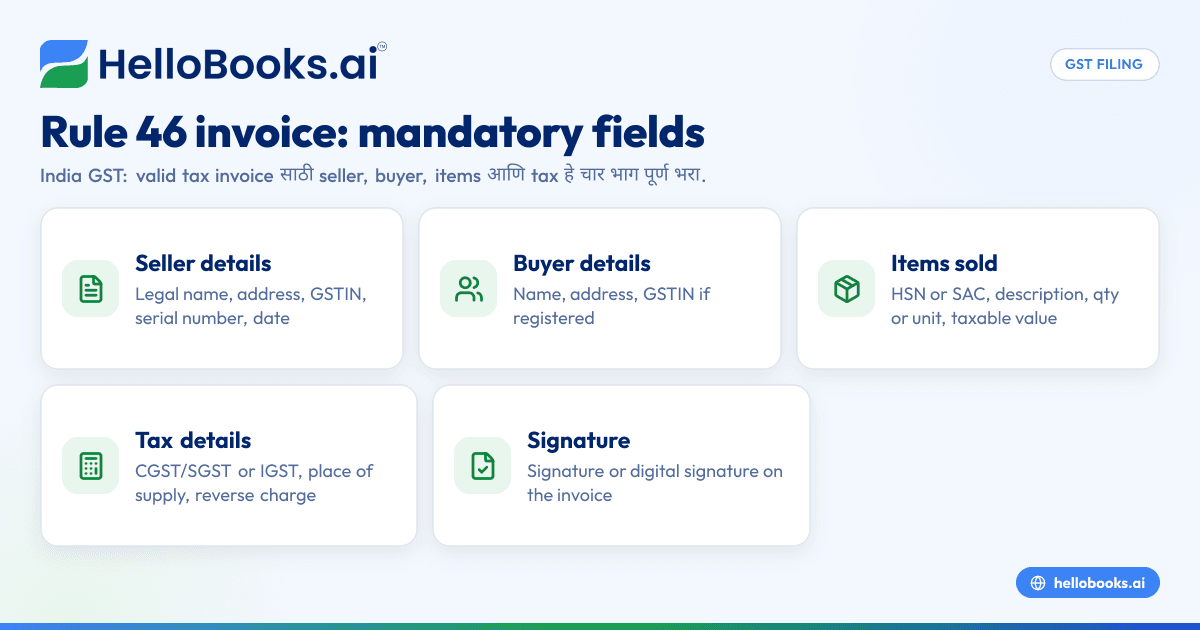
Rule 46 समजून घ्यायचा सर्वात सोपा मार्ग म्हणजे invoice ला चार भागांत पाहणे:
- supplier कोण आहे
- recipient कोण आहे
- नेमका कोणता supply केला आहे
- tax कोणत्या head मध्ये लागतो
सामान्यतः tax invoice मध्ये खालील प्रकारची माहिती अपेक्षित असते:
- supplier चे legal name, address आणि GSTIN
- सलग चालणारा unique serial number
- issue date
- buyer registered असेल तर त्याचे नाव, address आणि GSTIN
- goods साठी HSN किंवा services साठी SAC, जिथे लागू असेल
- description, quantity, unit, value
- discount किंवा adjustment नंतरची taxable value
- CGST, SGST, UTGST, IGST किंवा cess चा breakup, जिथे लागू असेल
- place of supply, विशेषतः inter-state supply मध्ये
- reverse charge लागू आहे का याची नोंद, जिथे आवश्यक असेल
- authorised signature किंवा electronic authentication, जिथे नियम परवानगी देतात
याचा काय उपयोग? तुमचा ग्राहक ITC claim करताना, तुमचा CA GSTR-1 पाहताना, आणि department scrutiny करताना हेच fields प्रथम तपासले जातात. म्हणूनच smart invoicing सारखे software उपयोगी पडते: invoice तयार करतानाच GSTIN, HSN, place of supply आणि tax head split योग्य ठेवणे manual typing पेक्षा सुरक्षित ठरते.
serial number, buyer details आणि description इथेच बहुतेक चुका होतात
Invoice invalid ठरण्याची मोठी कारणे अनेकदा complex tax issue नसतात; साध्या data quality च्या चुका असतात.
1) Serial number
Rule 46 serial numbering बद्दल अट ठेवतो. exact format, character limits आणि current interpretation साठी CBIC notifications आणि GST Portal वरील guidance तपासावी. Practical point इतकाच: series सलग, unique आणि traceable ठेवा. एकाच financial year मध्ये duplicate invoice number तयार होणे audit trail साठी धोकादायक आहे.
2) Buyer registered आहे का नाही
Buyer कडे GSTIN असेल तर invoice वर त्याचे legal details बरोबर असणे फार महत्त्वाचे आहे. Trade name, branch address आणि GST registration मधील legal name यांत फरक असू शकतो. अशा वेळी GSTIN validate करून मगच invoice raise करणे चांगले. यासाठी GSTIN validator सारखी साधने उपयोगी पडतात.
3) Description खूप vague ठेवणे
"material supplied" किंवा "services rendered" अशी generic line item wording dispute निर्माण करते. Description, unit, quantity आणि taxable value यांच्यात logic दिसला पाहिजे. Inventory ठेवणाऱ्या व्यापाऱ्यांसाठी item master नीट असल्यास प्रत्येक sale वर description, HSN आणि stock movement consistent राहतात; म्हणून inventory-linked invoicing उपयोगी पडते, विशेषतः trader, wholesaler किंवा distributor साठी.
HSN, SAC आणि item master: फक्त code नाही, return quality चा पाया
HSN किंवा SAC ही invoice वरील छोटी ओळ वाटली तरी downstream compliance मध्ये तिचा मोठा प्रभाव असतो. चुकीचा HSN दिल्यास फक्त invoice चे appearance बिघडत नाही; tax classification, GSTR-1 reporting आणि customer disputes यावर परिणाम होऊ शकतो.
किती digits द्यायचे, कोणत्या turnover slab ला काय requirement आहे, हे bare fact म्हणून लक्षात ठेवण्यापेक्षा अधिक सुरक्षित पद्धत म्हणजे current requirement CBIC notifications आणि GST Portal वरून तपासणे. कारण digit requirement आणि reporting instructions बदलू शकतात. त्यामुळे कोणते digits द्यायचे याबाबत अधिकृत source पाहिल्याशिवाय final decision घेऊ नका.
व्यवहारात काय करावे?
- प्रत्येक item/service साठी master तयार करा
- त्या master मध्ये HSN/SAC lock करा
- taxable unit, default rate logic आणि description एकत्र ठेवा
- purchase side व sales side classification वेगळी पडत नाही ना ते पाहा
तुम्ही supplier bills photo किंवा PDF मधून capture करत असाल, OCR ने purchase bills वाचून HSN/SAC compare करणे उपयोगी ठरते. त्यातून inward documents आणि outward invoices यांत consistency येते. Return filing च्या आधी GSTR-2A/2B reconciliation आणि ITC tracking केल्यास supplier ने अपलोड केलेली माहिती आणि तुमच्या books मधील bills जुळतात का हेही लक्षात येते.
CGST + SGST कधी, IGST कधी: place of supply इथे निर्णायक असतो
मराठीत सांगायचे तर invoice वरचा सर्वात धोकादायक गोंधळ म्हणजे “local sale आहे की inter-state?” हा. याचे उत्तर buyer चे head office कुठे आहे यावर नेहमी ठरत नाही; GST कायद्यानुसार place of supply rules लागू होतात. Goods आणि services साठी नियम वेगळे असू शकतात. Governing provisions Integrated Goods and Services Tax Act, 2017 आणि CGST framework मध्ये येतात; current interpretive guidance CBIC आणि GST Portal वर उपलब्ध असते.
जर चुकीचा tax head निवडला तर परिणाम फक्त cosmetic राहत नाही:
- CGST/SGST लावायचे होते तिथे IGST लावला जाऊ शकतो
- किंवा उलट
- customer ITC team invoice hold करू शकते
- amendment, credit note किंवा fresh invoice ची गरज पडू शकते
- books, returns आणि e-way bill data mismatch होऊ शकतो
म्हणून place-of-supply automation खूप महत्त्वाची ठरते. Buyer GSTIN, ship-to state आणि supply type पाहून software ने tax head split सुचवला तर manual error मोठ्या प्रमाणावर कमी होतो. हे especially multi-state व्यापार, branch billing, depot dispatch किंवा job-work scenarios मध्ये महत्त्वाचे असते.
खालील आकडे पूर्णपणे illustrative आणि invented आहेत; ते कोणताही सध्याचा tax rate सांगत नाहीत. समजा पुण्यातील supplier ने मुंबईतील registered buyer ला ₹1,00,000 taxable value चा माल विकला, आणि हे intra-state supply निघाले. अशा invented illustration मध्ये tax heads CGST आणि SGST मध्ये split होतील. दुसऱ्या invented illustration मध्ये तोच माल कर्नाटकातील buyer कडे गेला आणि place of supply inter-state निघाला, तर single IGST head लागेल. या calculation मध्ये freight classification, discount timing, cess, exempt components, composite supply आणि valuation disputes समाविष्ट केलेले नाहीत.
reverse charge, delivery address आणि ship-to / bill-to तपशील सोपे समजू नका
अनेक SMEs invoice वर मुख्य value आणि tax दाखवतात, पण supporting fields मध्ये हलगर्जी करतात. Scrutiny मात्र अनेकदा त्या supporting fields वरच अडकते.
Reverse charge
Reverse charge लागू आहे का, हे transaction-specific असते. ते supplier type, service nature, notified category किंवा import structure वर अवलंबून असू शकते. Reverse charge बाबत current categories आणि conditions CBIC notifications व GST Portal वर तपासाव्या. Invoice वर योग्य disclosure नसल्यास accounting, ITC tracking आणि return treatment बिघडू शकते. Software मध्ये reverse charge handling built in असल्यास bill booking पासून return classification पर्यंत consistency राखणे सोपे होते.
Delivery address वेगळा असेल तर
Bill-to एक state आणि ship-to दुसरी state असू शकते. Warehouse dispatch, branch transfer-like commercial arrangements, customer site delivery, Amazon/marketplace fulfilment, consignment movements अशा अनेक practical cases मध्ये address lines महत्त्वाच्या ठरतात. चुकीचा ship-to address e-way bill आणि invoice यांच्यात mismatch निर्माण करू शकतो.
Place of supply स्पष्ट लिहिणे
विशेषतः IGST scenarios मध्ये place of supply human-readable स्वरूपात ठेवणे उपयुक्त असते. राज्याचे नाव आणि relevant details स्पष्ट असतील तर customer accounts team ला invoice validate करणे सोपे जाते.
e-invoice, IRN आणि signed QR: सगळ्यांना नाही, पण लागू असेल तर चुकवू नका
सर्व भारतीय businesses ना e-invoicing लागू नसते. कोणाला लागू होते, turnover-linked applicability, exemptions आणि effective dates या बाबी CBIC notifications, GSTN advisories आणि Invoice Registration Portal related official publications मध्ये दिलेल्या असतात. त्यामुळे “मला लागू आहे का?” याचे उत्तर अधिकृत source वरून verify करणे आवश्यक आहे.
लागू असेल तर tax invoice हा फक्त PDF किंवा print राहात नाही; तो GST system validation शी जोडला जातो. अशा वेळी IRN आणि signed QR हे compliance chain चा भाग बनतात. Manual portal upload वर अवलंबून राहिल्यास duplication, rejection किंवा delay होऊ शकतो.
इथे integrated workflow महत्त्वाचा असतो. e-invoicing software वापरून invoice save करतानाच IRN आणि signed QR मिळवणे, आणि त्याच data वरून पुढे GSTR-1 तयार होणे, हा workflow re-entry कमी करतो. तुम्ही dispatch-heavy business चालवत असाल तर invoice मधूनच e-way bill software वापरून EWB तयार करणेही उपयोगी पडते, कारण vehicle/consignment data वेगळे पुन्हा टाकावे लागत नाही.
invoice तयार करणे आणि books जुळवणे या दोन स्वतंत्र गोष्टी नाहीत
भारतात अनेक लहान व्यवसाय invoice Excel मध्ये तयार करतात, GST Portal वर return वेगळा भरतात, bank statement NEFT/RTGS/IMPS/UPI receipts साठी वेगळा पाहतात, आणि वर्षाअखेरीस Tally मध्ये entries adjust करतात. यात सर्वात मोठा धोका म्हणजे एकाच transaction ची चार वेगवेगळी versions तयार होणे.
चांगली invoice discipline म्हणजे फक्त legal compliance नाही; ती bookkeeping discipline आहे.
जेव्हा तुम्ही monthly bank statement upload करता आणि AI reconciliation receipts ला invoices शी match करते, तेव्हा खालील फायदे होतात:
- unpaid आणि paid invoices स्पष्ट दिसतात
- customer-wise outstanding ageing तयार होते
- partial receipt आणि short payment लवकर सापडतात
- GST value आणि bank realization यातील gaps लक्षात येतात
यासाठी bank reconciliation software आणि ai bookkeeping प्रकारचे workflow मदत करतात. तसेच, invoices मधूनच gst return filing software ने GSTR-1 आणि GSTR-3B direct file केल्यास books आणि returns जुळवणे सुलभ होते. GSTR-2A/2B reconciliation वेगळ्याच spreadsheet मध्ये न ठेवता त्याच system मध्ये ITC tracking केल्यास inward-outward picture स्पष्ट राहते.
जर तुमचा व्यवसाय अजूनही Tally वर चालत असेल, तरी migration एकदम करणे आवश्यक नाही. tally-alternative पाहताना practical प्रश्न असा असतो: existing data, teams आणि CA workflow disturb न करता invoicing आणि GST quality सुधारता येते का? Multi-GSTIN businesses साठी एकाच login मधून वेगवेगळ्या state registrations हाताळणेही उपयोगी पडते.
महाराष्ट्रातील व्यापारी, सेवा व्यवसाय आणि freelancers यांनी invoice तपासताना काय पाहावे
हा ready-reference checklist नाही; तर practical review lens आहे.
जर तुम्ही trader असाल
- item description आणि HSN master consistent आहेत का
- stock issue आणि invoice quantity जुळते का
- intra-state sale वर CGST/SGST आणि inter-state वर IGST logic बरोबर लागतो का
- dispatch असेल तर e-way bill data invoice शी match होते का
जर तुम्ही service provider असाल
- SAC, place of supply आणि client GSTIN accuracy तपासा
- milestone billing, advance adjustment, reimbursements यांचा treatment स्पष्ट ठेवा
- bill-to/ship-to equivalent project-site details नीट लिहा, जिथे लागू असेल
जर तुम्ही freelancer किंवा consultant असाल
- unregistered client आणि registered client यांत invoice detail requirement वेगळी असू शकते
- export of services, OIDAR-like situations किंवा foreign remittance cases मध्ये general domestic template वापरू नका; expert review घ्या
- TDS deduction client करत असेल तर accounting entry invoice trail शी जोडलेली ठेवा
काही वाचकांसाठी tools/gst-invoice-validator, tools/hsn-code-search आणि tools/gst-calculator ही free India tools प्रारंभिक self-check साठी उपयुक्त ठरू शकतात. पण classification, place of supply किंवा reverse charge वर ambiguity असेल तर CA किंवा GST practitioner कडून review घेणेच योग्य.
शेवटी valid GST invoice म्हणजे सुंदर template नव्हे, तर audit-ready data
भारतामध्ये valid GST invoice चे रहस्य “सरकारी format download” मध्ये नाही. ते CGST Rules मधील Rule 46 समजून, CBIC आणि GSTN च्या current guidance नुसार fields अचूक ठेवण्यात आहे. Supplier details, buyer GSTIN, serial number, HSN/SAC, taxable value, place of supply, correct tax head split, reverse charge disclosure, आणि लागू असेल तर e-invoice IRN व signed QR — हे सर्व एकाच data chain चा भाग आहेत.
जर तुम्हाला invoice पासून return आणि payment reconciliation पर्यंत एकसंध workflow हवा असेल, तर HelloBooks मध्ये GST invoicing, e-invoicing, e-way bill creation, GSTR-1 आणि GSTR-3B direct filing, bank statement upload आधारित AI reconciliation, OCR-based purchase capture, inventory आणि multi-GSTIN support हे सर्व एकत्र काम करतात. अधिक माहिती, demo किंवा भारतासाठी plans पाहायचे असतील तर demo, India page आणि pricing पहा.
अखेरीस, rates, thresholds, applicability dates आणि document-specific conditions या नेहमी बदलू शकतात. त्यामुळे कोणतीही specific figure वापरण्यापूर्वी संबंधित tax law, CBIC notification, GST Portal advisory किंवा GSTN publication तपासा; doubt असेल तर EXPERT REVIEW घ्या.


