
Key takeaways
What this article covers, in order:
- Understanding eCheck Payments
- How eChecks Work
- Function of the clearing network
- Benefits of electronic check payments
- Security and risk management
- Enabling eCheck payments in your business
Understanding eCheck Payments
How eChecks Work
An eCheck is a digital representation of a paper check for transferring money. They facilitate the use of paperless payments for bills, invoices, and rent. This creates a debit from the payer's bank account and sends a digital instruction to the payee to collect money. With this method, you go through an almost identical process but removes any physical check from the equation.
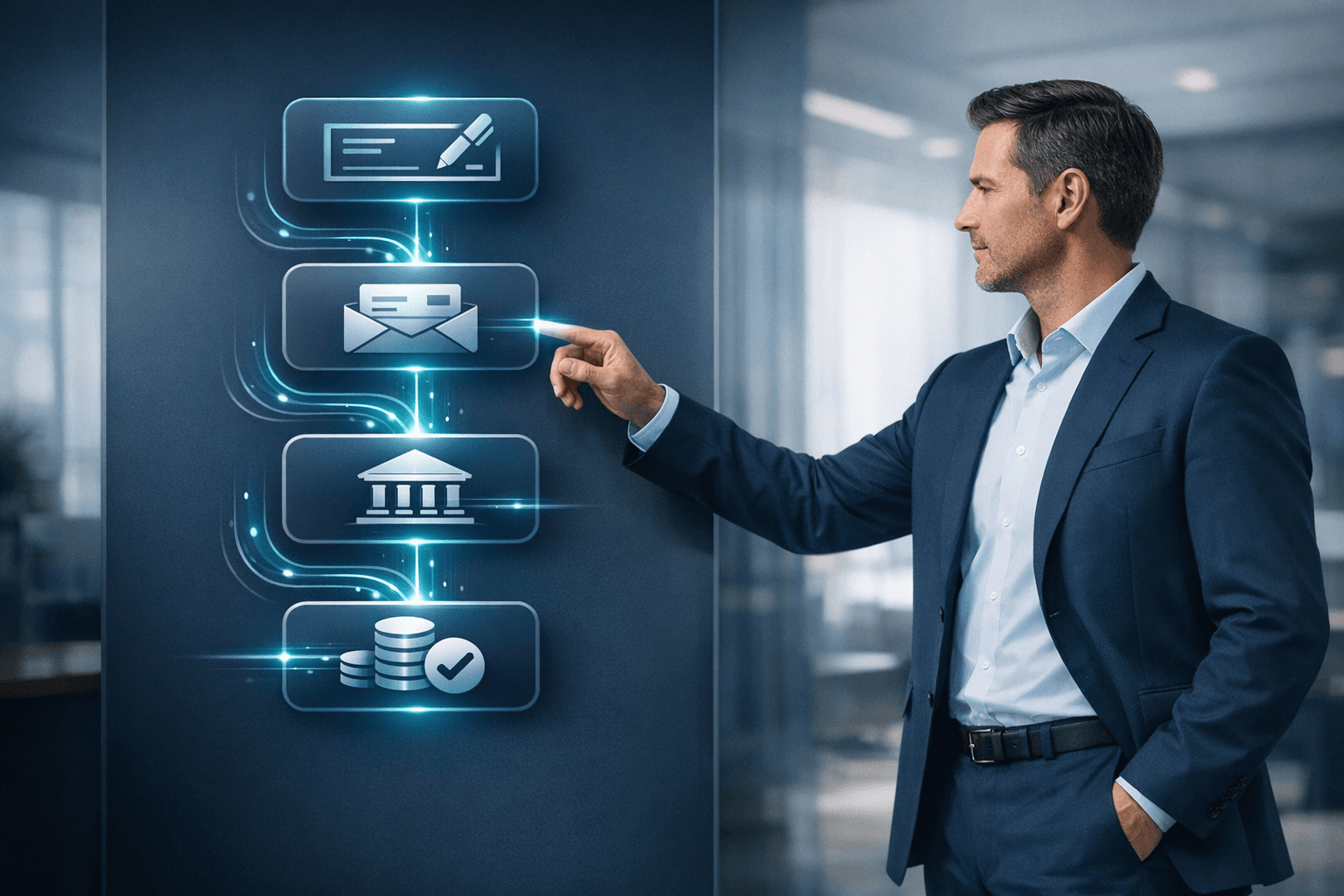
All transactions start first with authorization and initiation. The payer provides consent by signing a digital form or entering bank details and account numbers. That permission is basically telling their bank to release funds to the recipient. Both sides archive the authorization for record and possible dispute resolution.
They batch transactions that get both processed and settled through bank networks that clear the payment. A payer, who does a digital file with the payment details, then sends it to his b bank and this system (with post-processed) forwards it to p bank where payee holds an account. The transfer pushes funds through an automated clearing system until the transaction gets settled. Wire transfer timing relies on networks that can all take different times and bank processing windows.
Function of the clearing network
What clearing networks do
A clearinghouse transfers payment information across banks and enforces settlement rules. It is basically confirms account numbers, validates funds available or gather exceptions/returns. The network ensures the actual movement of money and manages how funds move securely and on the leave both banks updating balances correctly. Electronic check payments do not need a clearing network for settlement structuring at all.
The primary infrastructure behind eCheck movement is automated clearing house systems across the globe. The automated clearing house (ACH) transfer system aggregates electronic goods and transfers them between institutions overnight. Batching packs multiple payments together, a cost-effective way to process lots of them. It is more secure than instant card networks but can provide same-day bank-to-bank transfers from on and off-network partners.
Timing and finality are subject to clearance rules and bank cutoffs. Some ACH windows run multiple times per day and other windows only run once daily. Returns and reversals are governed by strict timelines, so payees should account for several days to allow for final settlement. If they have an understanding of timing, businesses can better manage their cash flow and steer clear from overdrafts.
Benefits of electronic check payments
Cost and convenience advantages
eChecks are typically cheaper than the combination of card payments and paper checks. Some types of ACH cash transfers cost the banks and clearing networks less than card processing. Payers use no envelope nor stamp whereas payees stay away from going to the bank for deposit purposes. That record helps with accounting and audit trails, and is built into the digital stock ledger with each transaction.
Recurring billing and business planning are aided by predictability. A business can automate charges and know how long it will take to clear. That predictability helps in cash flow forecasting and late payment issues. There are a number of different vendors that choose eChecks for subscription and invoice collections.
Security and fraud reduction
Some fraud associated with lost or stolen paper checks may be mitigated with electronic checks. Payment files are transmitted with encryption, and they are also processed with bank-level security. The authorization of payments includes steps for the payer to authenticate himself and identify if the payment is actually valid. However, users should be compliant with best practices to mitigate account takeover or phishing risks.
Security and risk management
Authentication and verification practices
Using eChecks requires strong authentication that drastically minimizes unauthorized payments. By using micro-deposits or alternative verification methods to confirm account ownership, it prevents fraud. Payees should maintain autrorisation records and check if mismatched account names apply. Monitoring cleared transactions regularly enables the quick detection of suspicious activity.
Data encryption and secure transfer protocols protect data in transit. Networks encrypt payment files and provide secure channels for the transfer of sensitive details between banks. Both payer and payee systems should also apply software updates on a regular basis, using strong access control definitions. This reduces the risk of banking information being intercepted and misused.
Handling disputes and returns
When accounts fall into a negative balance or unauthorized debits on an account occur, returns and disputes can happen. Networks establish windows for returns, while both sides should retain records to support resolution. Companies need to incorporate straightforward return policies and dispute procedures into their payment contracts. Communication is Key While timely management of any disruption speeds up the resolution process, communication becomes all the more important as it significantly reduces the financial disruption.
Enabling eCheck payments in your business
Preparing and selecting partners
The first step is to collect appropriate signed authorizations from customers prior to processing the electronic check payment. Use simple authorization language that explains the schedule and amount of debit. Make sure that the authorizations are stored securely on your system and that you can provide proof if required. Make sure your bank or processor offers the right clearing options too.
Operational setup and reconciliation
Decide on your payment file transfer method and how many times you will process batches. Reconcile practices as per your bank settlement so that there are no mismatch issues. Wherever possible, automate reconciliation to minimize human errors and to lower cycle time on closing. We conduct clear reconciliation to identify returned items and make sure that closed accounts are not being tried repeatedly.
Best practices and user communication
Provide education on what eCheck debits will look like on statements before you charge. Clear notices of upcoming debits and allow simple revocation. Implement a transparent dispute and refund policy to help gain trust. Communication reduces the chance of disputes and increases the chances of long-term payment success.
Key takeaways
E-check payments combine reminders of"check cases"with digital processing through the bank. They leverages authorization, clearing networks and settlement to shift money paperlessly. And businesses earn benefits such as lower costs, predictable timing and good record keeping from eChecks. Even careful security and effective communication regarding the same ensures reliable operations for payers and payees alike.
- eChecks cut down on physical processing stages and postage expenses
- Cross-Border Payment Systems ACH transfer batch payment as a low-cost settlement
- Have clear authorization records regarding disputes and audits
- Make sure to perform account confirmation ahead of attempting any debits.
- Track returns quickly so you don't fail again
- Teach customers how debits will show on statements