Key takeaways
What this article covers, in order:
- Step-by-step instructions for implementing payment processing, managing costs and safeguarding customer information.
- Learn about the fundamentals of payment processing
- Reconciling payments with accounting
- Choose to whom you will make the payment options available
- Multi-currency pricing and cross-border considerations
- Compare fee structures and costs
Step-by-step instructions for implementing payment processing, managing costs and safeguarding customer information.
As a small business you could be missing sales, reducing average sale value and even upsetting your customers if you don't take credit card payments. This guide outlines the key steps for processing credit card payments smoothly and cost effectively — from understanding fees to deciding on whether you should process payments using a payment terminal, mobile device/point of sale system or online gateway and keeping transactions secure.
Learn about the fundamentals of payment processing
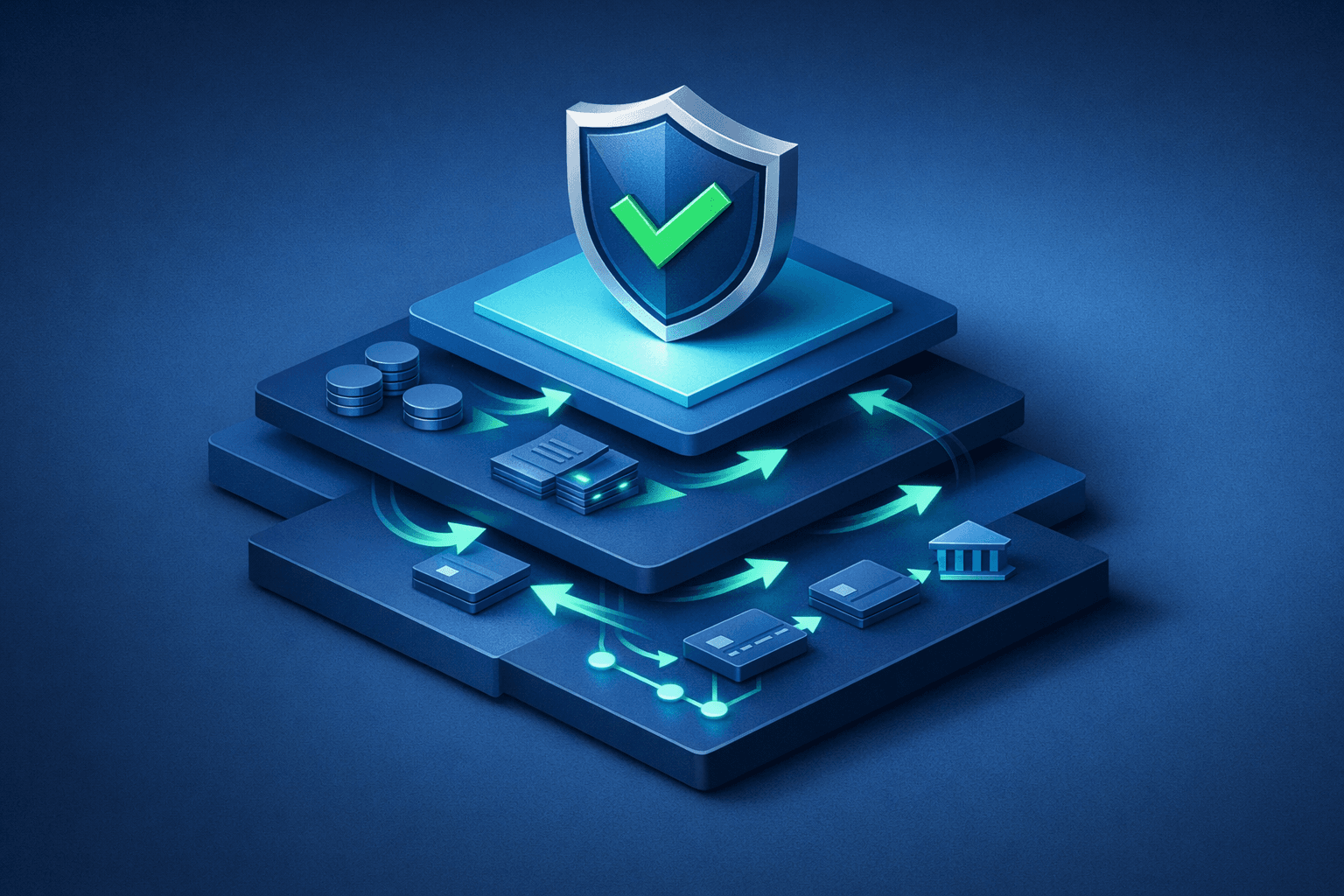
When you process a payment, multiple moving parts are involved in getting the money from the customer’s card through your business and into the system: The customer's card, the merchant (you), the card network, and financial institutions that evaluate and settle transactions. When a customer uses a card to pay, the transaction must be authorized and then settled — and each step can come with charges. When you know the basics, you can at least assess your options and be able to spot hidden costs.
Reconciling payments with accounting
Card receipts and your accounting records will only match if someone deliberately makes sure they do. Reconciliation is that process, and doing it well means setting up clear workflows where every transaction gets matched to an invoice, a bank deposit, and the fees on your processor statement. The less manual effort required, the fewer errors will slip through. Automating as much of the import and matching process as possible keeps your financial reports reliable for tax filing and cash flow decisions. When you do find mismatches, reviewing them promptly is far easier than chasing them down weeks later. Build these into your regular process:
- Automate imports from your payment provider into your accounting system to reduce manual entry errors
- Reconcile processor fees separately from gross sales so your net revenue figures stay accurate
- Match refunds and chargebacks back to their original entries so nothing disappears unexplained
- Keep a weekly review cadence during high-volume periods so discrepancies are caught quickly
- Document your reconciliation process so anyone on the team can run it consistently
Choose to whom you will make the payment options available
The vast majority of customers would prefer to pay by major credit and debit cards. And if you sell in person, try out a card reader or contactless acceptance. Use a virtual terminal or invoicing system for phone orders or mail orders. For online retailers, use a checkout flow that has the card entry integrated securely. Providing more convenient payment methods results in lower cart abandonment and higher conversion.
Multi-currency pricing and cross-border considerations
Selling to customers in other countries involves choices that go beyond just accepting different currencies. Pricing in your customer's currency tends to convert better, but currency conversion, foreign interchange fees, and settlement terms can all affect your margins. You need to understand the full picture before deciding which approach makes sense for your business. Transparency matters a lot here. Customers who see unexpected charges at checkout abandon their carts. Make sure taxes and duties are clearly displayed before the final step, and work with payment providers that give you clean, itemized settlement reporting. A few things worth getting right from the start:
- Choose payment providers with transparent FX rates and clear, itemized settlement reporting
- Offer local currency pricing for your most important markets where conversion rates make it viable
- Display duties and taxes upfront at checkout to reduce cart abandonment and returns
- Monitor international chargeback trends separately so regional issues do not get lost in aggregate data
- Understand how settlement currency affects your actual received amount before setting prices
Compare fee structures and costs
Processing rates are generally a percentage of your sale amount plus a flat fee per transaction. There are possible monthly fees, terminal rental charges and chargeback fees as well as additional costs for services such as recurring billing or advanced reporting. Compare effective rates by calculating your monthly volume and average transaction size, so you can see what the total cost per month will be, not just the headline rate.
Integrating payments with inventory and fulfillment
When your payment system does not talk to your inventory and fulfillment systems, you end up with overselling, delayed shipments, and customer complaints that all trace back to the same root cause: the data is out of sync. Tightly coupling these systems means that when a sale is captured, inventory decrements happen automatically and fulfillment teams are notified without anyone doing it manually. It also simplifies returns and refunds considerably, because your stock and financial records stay aligned. Map payment statuses to order states so your customer-facing systems always show accurate delivery expectations. Here is how to build that integration robustly:
- Update inventory counts on payment capture rather than authorization to avoid overselling
- Sync refunds to automatically restock items where relevant so inventory counts stay accurate
- Use webhooks for real-time order state updates so fulfillment teams always have current information
- Ensure fulfillment sees final settlement confirmation before shipping high-value items
- Test end-to-end scenarios including failed payments and partial refunds before going live
Evaluate how transactions are routed
Rather, transactions are directed through any one of a range of payment networks and bank processors. That can impact the speed at which you’re authorized, your acceptance rates and occasionally even cost. Understand whether the option directly routes to card networks, utilizes aggregated accounts or supplies next-day funds. Faster settlement can be a great improvement for cash flow, and better routing can lead to fewer declines and better customer satisfaction.
Negotiating contracts and service level agreements
Most businesses accept the standard terms their payment provider offers without realizing how much room there is to negotiate. Beyond headline rates, your contract can include minimum term conditions, termination fees, and service level commitments that significantly affect your flexibility. The time to negotiate is before you sign, not when you are already locked in. Ask for everything in writing: fee breakdowns, decline reporting, settlement timing. As your volume grows, you should expect lower fees in return. Pay close attention to auto-renewal clauses and notice periods. A few contract terms worth pushing for:
- Request itemized fee schedules and the right to advance notice before any fee changes
- Negotiate caps on unusual or incidental charges so you are not surprised by unexpected fees
- Ask for uptime or settlement SLAs with real remedies, not just acknowledgment of the failure
- Avoid long auto-renewal clauses without clear opt-out windows built in
- Build in a pricing review after periods of sustained volume growth so rates reflect your relationship
Pick the best hardware and software
Technology follows your business model. For storefronts, opt for a countertop or mobile card reader that accepts both EMV and contactless payments. A mobile reader is handy for delivery or events. For websites, choose an integration that allows for a secure checkout on your website along with saved cards, refunds and invoicing. Make sure that both hardware and software are capable of encryption, and they conform to security best practices.
Monitoring and testing payment flows regularly
Payment issues discovered by customers are almost always more expensive than ones discovered by your own testing. Regular, systematic testing catches problems before they affect real transactions and helps you maintain the authorization rates and checkout conversion times that your revenue depends on. Create alerts so your team is notified immediately when declines spike or error rates jump, and make sure they know the rollback steps before anything goes wrong. Load testing ahead of big sales or promotions is especially worth doing. Here is what a solid monitoring setup looks like:
- Schedule automated test transactions after every deployment so you catch regressions immediately
- Monitor conversion and decline rates in real time rather than reviewing them in weekly reports
- Set alerts for sudden drops in authorization rates so you can respond before customers notice
- Maintain clear rollback procedures for any payment-related changes so recovery is fast
- Perform load tests ahead of major promotions to find capacity limits before peak demand hits
Prioritize security and compliance
Protecting cardholder data is essential. Leverage end-to-end encryption and tokenisation where card information is never stored within your environment. Keep your out checkout and devices secure according to best practices. Keep strong access controls in place, patch software frequently and know the liability of data breaches. Taking the security-first approach minimises risk of fraud but also ensures you customer trust.
Data retention policies and customer privacy notices
Holding onto payment data longer than you need to creates risk without creating value. Define how long you keep cardholder data, receipts, and customer communications based on what your legal and business requirements actually are, not just by default. Minimize what you store at every opportunity, and rely on tokenization for recurring billing so you are not holding raw card data at all. A clear, honest privacy notice at checkout builds trust and is increasingly a legal requirement in many markets. Make it easy for customers to understand what data you hold and how to request deletion. Keep your policies current as regulations change:
- Create a documented retention schedule for transaction records tied to actual legal requirements
- Use tokenization to avoid storing raw card data for any recurring or subscription billing
- Publish a concise privacy notice at checkout that explains data use in plain language
- Provide a straightforward way for customers to request data deletion and honor those requests
- Log all access to sensitive records so you have an audit trail if questions arise
Simplify checkout to reduce friction
A smooth checkout increases sales. Reduce the number of fields required, provide obvious prompts and guest checkout options for online sales. Offline, streamline the steps required to pay and train staff to resolve common issues quickly. For services that recur, establish clear consent and easy cancellation procedures to ensure customers stay happy over time.
Designing accessible and mobile-friendly checkouts
A checkout that works beautifully on a desktop but falls apart on a phone, or that screen readers cannot navigate, is losing real customers and real revenue. In some markets, accessibility is also a legal requirement. Designing for the full range of users from the start is far less costly than retrofitting it later. The fundamentals are not complicated: forms need proper labels, touch targets need to be large enough, and third-party scripts need to load without slowing the page on slower connections. Test on the devices and network conditions your actual customers use. Focus on these:
- Ensure all form fields are properly labeled so screen readers can navigate checkout without issues
- Keep touch targets large and easy to tap on mobile so customers do not mis-tap and abandon
- Reduce third-party scripts that delay checkout rendering, especially for users on slower connections
- Test on older devices and low bandwidth conditions regularly, not just on your development machine
- Provide keyboard-only navigation paths so checkout is usable without a mouse or touchscreen
Manage refunds, disputes, and chargebacks
Offer clean refunds and document your transactions so you can quickly settle disputes. Retain receipts, communication logs and evidence of delivery or service. Deal with chargebacks quickly by providing proof to reduce losses. Educating your staff in best-authorisation practices and verification processes can stop many disputes before they happen.
Using payment analytics to inform marketing and pricing
Your payment data is doing more than recording transactions. It is telling you where customers hesitate, what markets have friction, and how pricing changes affect conversion. Treating payment analytics as a source of customer insight rather than just a finance function opens up a lot of useful information that often goes untapped. Declined transactions in particular can reveal pricing sensitivity or friction by region or card type that would be hard to spot any other way. Run A/B tests on checkout messaging and fees, and share what you learn with product and marketing teams. Start by tracking:
- Segment decline reasons by region and card type to identify where friction is concentrated
- Track lifetime value by payment method so you can see whether certain methods attract better customers
- Run A/B tests on checkout messaging and fee presentation to find what actually improves conversion
- Use payment timing data to optimize when you run promotions and how you structure offers
- Feed payment insights back to product and marketing teams rather than keeping them in finance
Track charges and compare over time
Monitor statements regularly for trends such as increasing chargebacks and high fees or payment failures. Explore new strategies to save money: change pricing, ask for alternative payment methods for low-cost transactions, or haggle with providers based on volume. Even small shifts can add up to significant savings over time.
Contingency planning for connectivity and hardware failures
Payments stop when your internet goes down, your card terminal dies, or your payment processor has an outage. These events are not common, but they happen, and when they do without a plan in place, you stop making sales. Having a fallback ready, whether an offline terminal, a secondary provider, or a manual invoicing process, means one failure does not become a full stop. Train your staff on fallback procedures before there is a problem, not during one. Test them periodically so the steps are familiar when they actually matter. And have a plan for how you communicate with customers when delays happen:
- Maintain an offline or secondary payment option so one failure does not stop all transactions
- Train staff on manual entry and delayed settlement processes before an incident happens
- Keep pre-written customer messaging templates for outages so communication is fast and calm
- Test your failover steps at least quarterly and after any major system changes
- Document post-incident reconciliation procedures so records stay clean after a fallback event
Offer customer-friendly invoicing and receipts
For service or B2B businesses, digital invoicing with card acceptance can help speed up collection. Include an itemized breakdown with due dates and easy payment link. Give instant digital receipts for card payments and make returns or refunds easy to keep customers on good terms.
Preparing for audits and compliance reviews
Audits of payment systems are much less painful when the evidence already exists, is organized, and is searchable. Keeping a clear audit trail for every payment, with receipts, authorization records, and correspondence in a structured system, means you are not scrambling to reconstruct records when a reviewer asks for them. Treat audits as an opportunity to tighten controls and refresh documentation, not just as compliance exercises. Regular internal reviews of security settings and access rights keep you permanently in a ready state. Build these habits in:
- Maintain searchable records of authorizations and settlements organized by date and transaction type
- Standardize folder structures for audit evidence so anyone can find what they need quickly
- Review access rights at least quarterly ahead of any formal audit so nothing surprises you
- Update documentation promptly when processes or providers change so records stay accurate
- Conduct mock audits periodically to find gaps before a real reviewer does
Balance convenience with risk management
Taking cards raises sales and opens up fraud. Employing standard fraud prevention measures, such as AVS, CVV and velocity checks for odd behavior. For higher risk industries, think about whether you want to have an extra layer of verification or a manual review for large transactions. Getting the balance right of convenience and security can protect both revenue and reputation.
Train staff and document processes
Make certain that employees know how to process payments and deal with declined cards as well as refund and dispute processes. Document step by dash procedures in writing for common tasks as well as exceptions. Flawless execution lowers mistakes and heightens their customer experience.
Plan for scaling
Your payment requirements will change as your business grows. Opt for solutions that grow with you - manage more transactions, handle subscriptions, and deliver advanced reporting. Be mindful of your growth When reviewing the new tech on offer, make sure to re-evaluate whether your current stack is still the most cost effective and efficient given where you are in terms of growth.
Focus on customer trust
Clear pricing, safe payment processing, and fast dispute resolution foster trust. Show accepted payment icons, provide a brief explanation about security at checkout and communicate clearly when something goes wrong. Trust results in repeat customers and positive word of mouth.
Building a long-term payments roadmap
Payment infrastructure tends to get rebuilt reactively, when something breaks or a new requirement arrives. A simple roadmap changes that dynamic. Knowing in advance when you plan to revisit providers, test new payment methods, and upgrade hardware lets you make those decisions deliberately rather than under pressure. Tie roadmap milestones to business goals like reducing processing fees, expanding to new markets, or improving checkout conversion. Review the plan at least quarterly so it stays current as regulations shift and customer payment preferences evolve. A few things worth building in:
- Set quarterly review points tied to specific business objectives rather than just reviewing when prompted
- Pilot new payment methods in low-risk segments first before committing to a full rollout
- Budget for annual hardware and integration upgrades so they do not become emergency costs
- Track roadmap progress in leadership reviews so payments stay visible as a strategic priority
- Include rollback plans for any major migrations so you have a route back if something goes wrong
Conclusion
Taking credit card payments can be a smart investment that boosts sales and makes processing simpler, as long as you have the right setup. Begin with an understanding of fees and security, choose hardware and software that fit your business plan, then track performance over time. By planning thoughtfully and continuing to optimize, your small business will bele to accept payments with confidence while trimming hidden costs and improving the customer experience.