
Key takeaways
What this article covers, in order:
- From Manual Tasks to Machine Intelligence
- The Vision is to Create an Intelligent Finance System
- The reasons why it is important to do this.
- 2. Modular Automation Does Not Stop at Rules, but Develops Ideas
- Key Capabilities:
- Significance of This Subject
From Manual Tasks to Machine Intelligence
For many decades, bookkeeping software has been used in business, yet it hasn’t changed much. While a lot of platforms stopped printing things out, the majority still depend mainly on people organizing documents and using set rules to make decisions.
We realized we could work harder to have a better outcome.
This led us to create intelligent finance systems that understand AI accounting innovation, explain their meaning, automate various tasks, and make it possible for a company to make smarter decisions quickly.
The Vision is to Create an Intelligent Finance System
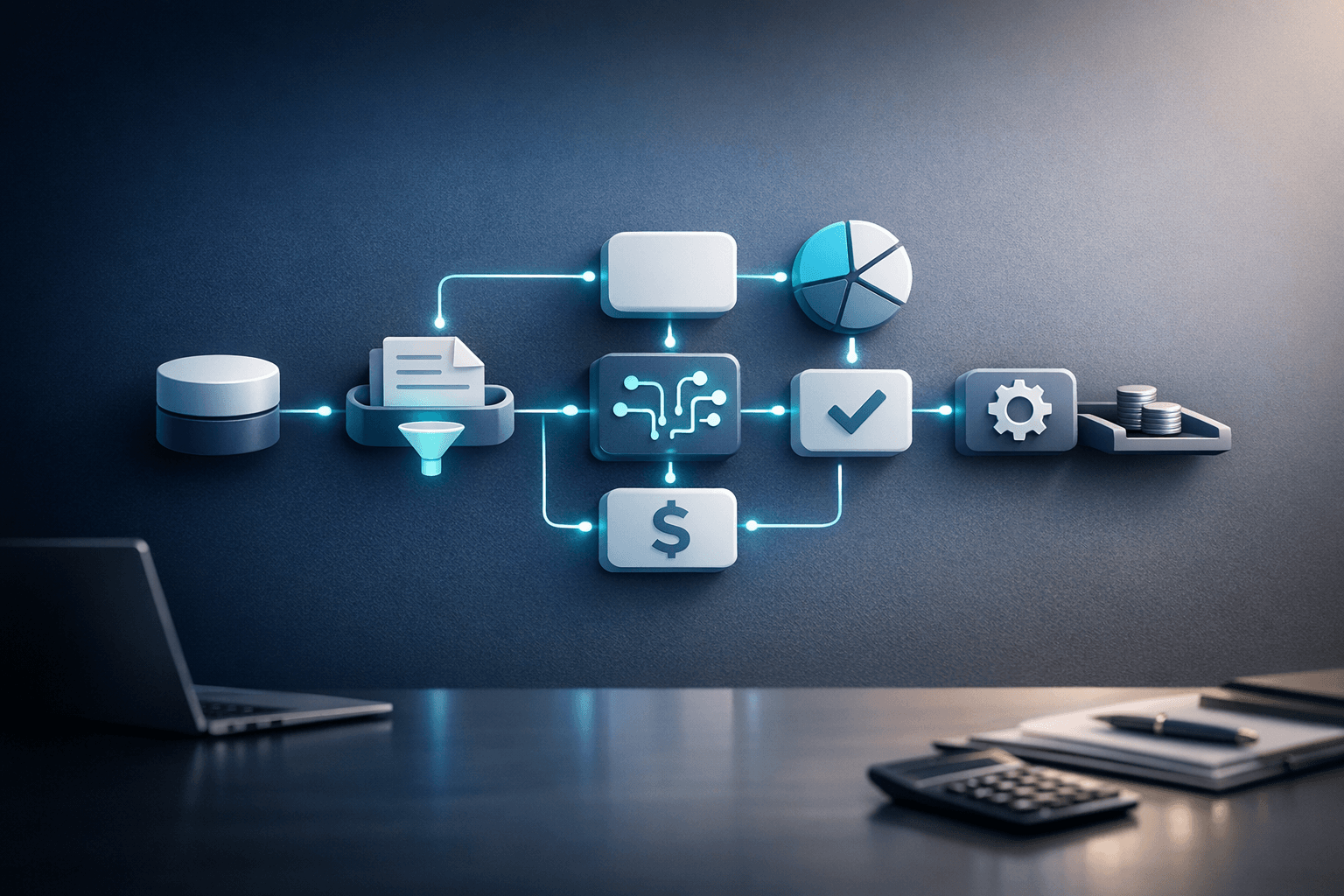
The unique part about us is the way our platform is set up. It is not only software that handles bookkeeping, with AI added to it.
It is an advanced financial system that brings together all its aspects.
- Get new knowledge after every deal.
- Its results become more accurate with additional studies.
- Lowers the amount of work needed for cleanup.
- Stops users from making mistakes as they use it easily and accurately
The result? Scissor makes your processes run smoothly, ensures everything is correct, and gives results you rely on.
1. A modern Chart of Accounts lets you find and use the right data at any time.
Majority of traditional accounting systems have fixed Charts of Accounts that are usually cluttered, old, or inconsistent between team members. We started this project from the beginning.
What’s Different:
- AI helps organize and keep updated all the accounts, Bank, Credit Card, Revenue, Expenses, and Liabilities, using the example of the transactions in your account.
- You can search and organize all your accounts by type, the schedule of deposits, or how much you have in each account.
- Grouping observations regularly gives people fewer chances to make errors, so audits and reports are easier.
The reasons why it is important to do this.
If your foundation is in order, all other activities, like reporting, reconciling, and analyzing, work better and more efficiently.
2. Modular Automation Does Not Stop at Rules, but Develops Ideas
In most cases, platforms use unchanging guidelines: They connect ‘X’ with ‘Y’ no matter the changes. Often, accounting that takes place in the real world isn’t so perfect. It uses artificial intelligence to do tasks more intelligently.
Key Capabilities:
- Like any GL, Evri brings its knowledge of previous events to suggest the right code for a transaction with an unfamiliar vendor.
- You can detect potential mistakes in the Dashboard before they result in further errors: like spurious records, inaccurate categories, or transactions without classification.
- It allows you to see how payments to particular vendors are dealt with, which may reveal any inconsistencies in them.
Significance of This Subject
As a result, the time spent resolving errors goes down, users feel confident about the data, and there is more consistency in the financial statements.
3. Smart vendor processes flow from when a purchase order is generated to when the company pays.
Managing vendors also focuses on organizing payments, using credits, and having tidy records instead of just overseeing spending. The AI system helps out with everything from the beginning to the end.
Key Features:
- A way to monitor both payments, purchase orders, and costs together
- Matching bills with the appropriate vendors based on previous experience
- Catching and avoiding credit card fraud
- Prediction-based categorization is useful for vendors no matter if they’ve sold with you before or not
Significance of This Subject
To save time and avoid confusion, users have a simple tool that provides precise vendor management.
4. Powerful Tools that Do More With Less Effort
All our platform’s features are created to simplify work and let you take charge.
Feature Highlights:
- Cleanup Dashboard– Identifies errors, missing data, and duplicates before they scale.
- Filters & Sorting- Helps users prioritize what needs attention—by status, value, or date.
- Categorization Tool– Learns from behavior and reduces manual tagging errors.
- Export Option- Share clean, reconciled data across departments or systems.
- Bank Filters- Isolate activity across multiple accounts to find trends or issues.
- Bulk Actions- Categorize, correct, or delete multiple items in seconds.
Real-World Application: An Example from a Freelancer
All of these features are designed to increase how quickly you work and still keep things accurate and under your authority.
5. It is intended for managers, not only for those who keep business records.
Bulk of tools focus only on getting tasks done, whereas ours were made for business leaders, not for office employees.
- Real-time dashboards help in making important decisions.
- It helps to spot important changes and dangers.
- This approach to design gets better after each attempt
Being a founder, CFO, or in the finance role, the system lets you know exactly what’s happening, provides speed, and frees up your time to think ahead.
Conclusion
What we created is not just an existing system with artificial intelligence added. We designed finance software for today’s businesses, making it anticipate risks and fit well into all business processes.
AI accounting is helpful for companies that are looking for both efficiency and smart decision making. The platform develops as your business does and allows you to emphasize important areas like strategy, results, and good finances.